


This site runs ads and generates income from affiliate links. Read my disclosure policy.
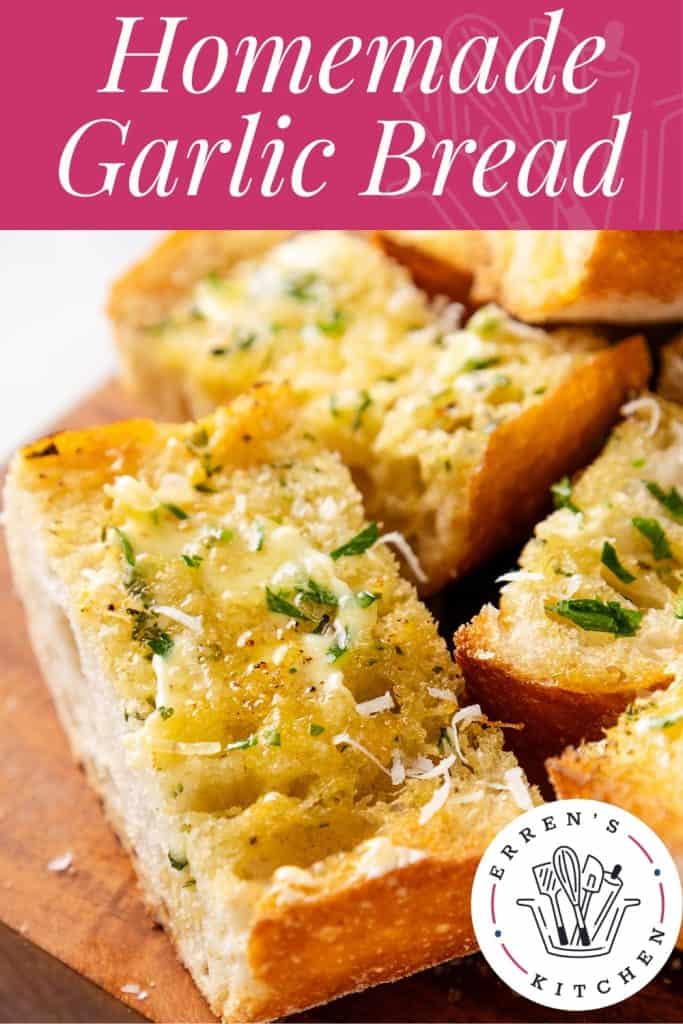
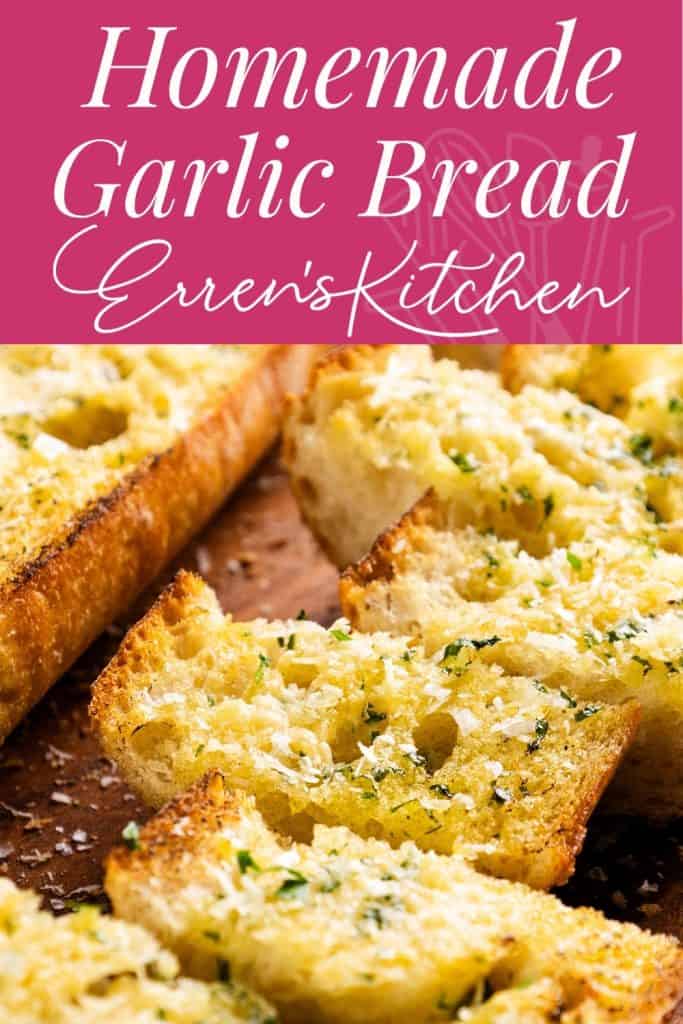
Make homemade garlic bread with plenty of fresh garlic and butter. It’s quick, easy, and ready for the table in just 25 minutes.
Know Before You Scroll

What You’ll Need
Italian bread, butter, fresh garlic, flaky sea salt, black pepper, parsley, and Parmesan.
Flavor Profile
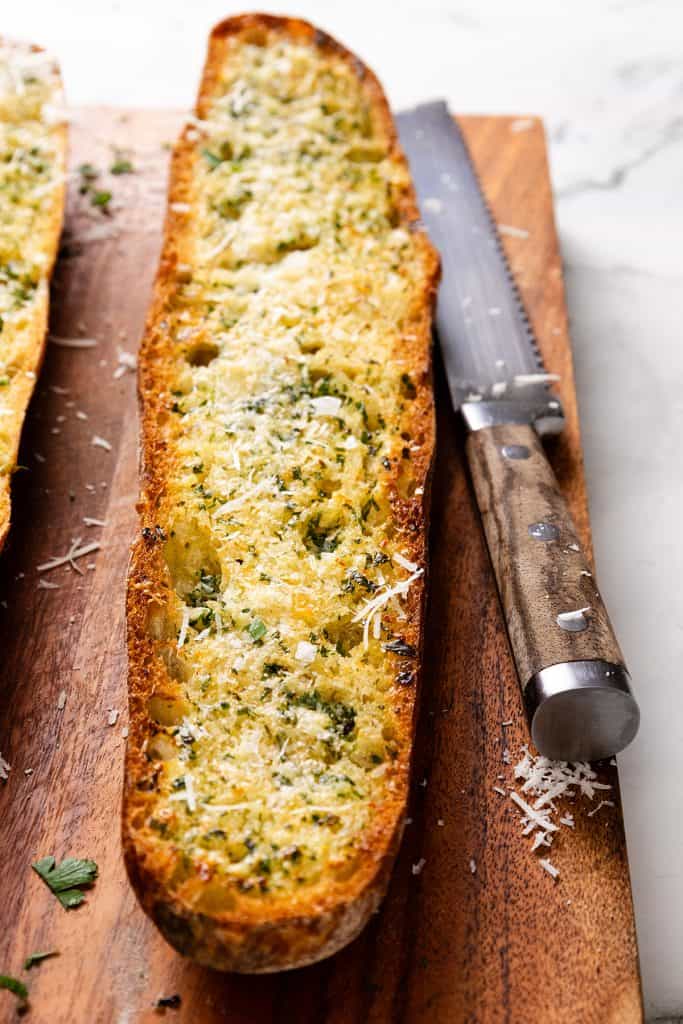
Rich and buttery with plenty of fresh garlic, salty Parmesan, fresh parsley, and crisp, toasted edges.
Difficulty Level
Very easy. If you can mix butter and slice a loaf of bread, you’ve got this.
Equipment Needed
Small mixing bowl, sharp bread knife, spoon or spatula, and baking sheet.
Top Tip
Use properly softened butter so you can spread it all the way to the edges without tearing or crushing the bread.
Time-Saving Tips
Make the garlic butter up to 3 days ahead and keep it refrigerated. When you’re ready, just spread, sprinkle, and bake.
Ingredient Swaps
French bread works in place of Italian bread, salted butter can replace unsalted if you reduce the added salt, and Pecorino Romano can stand in for Parmesan.
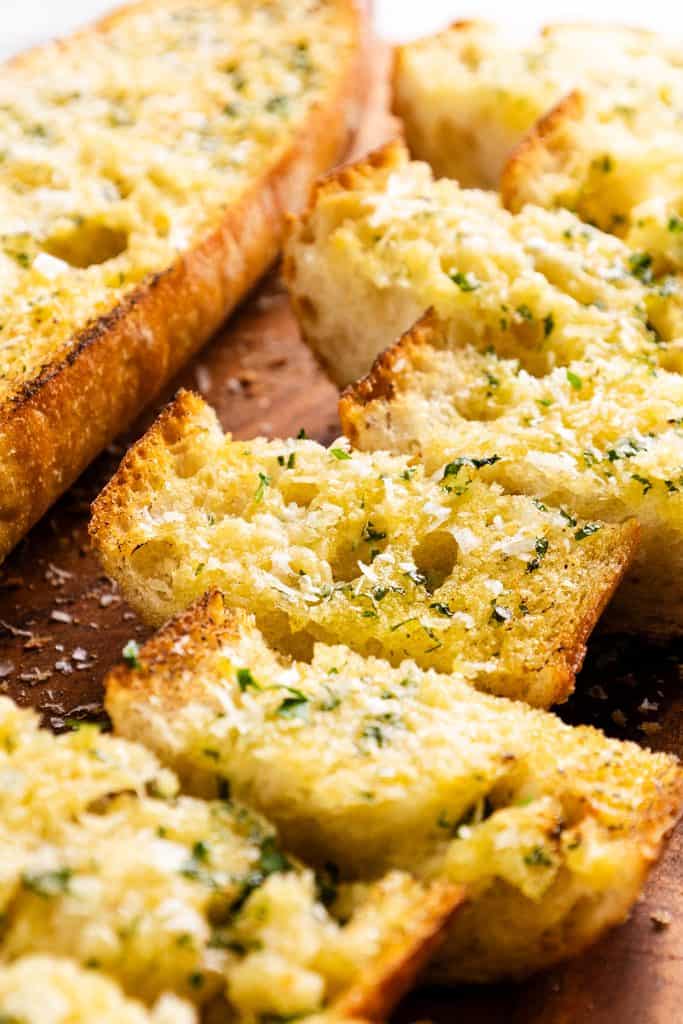
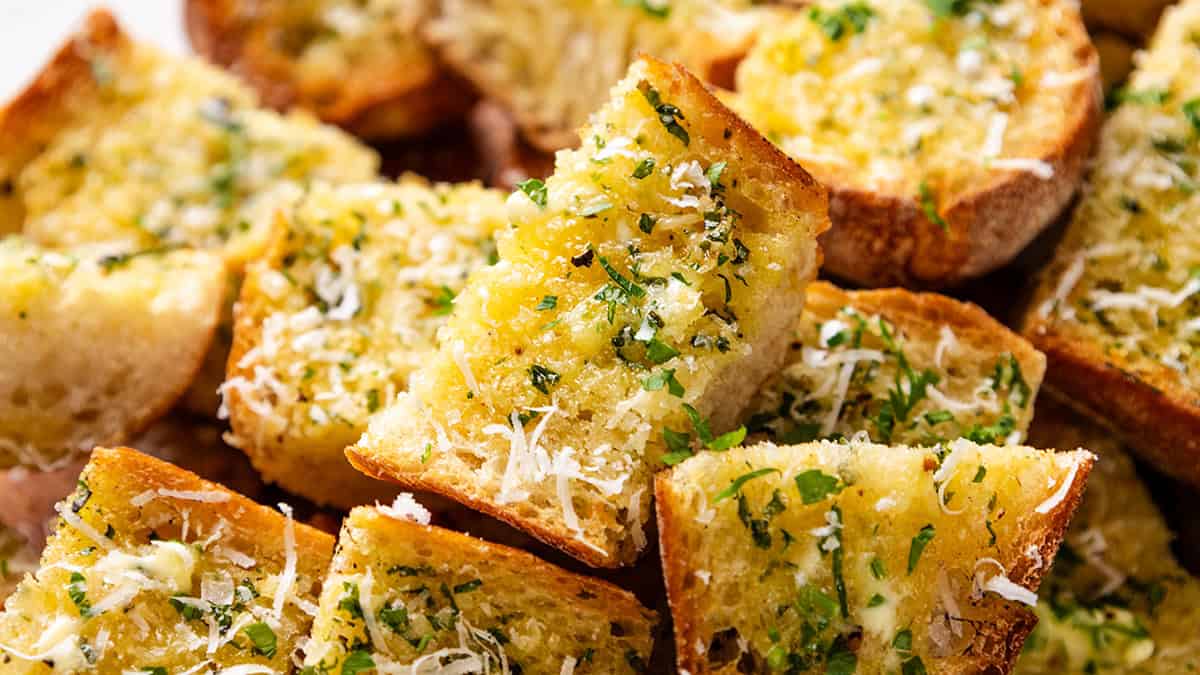
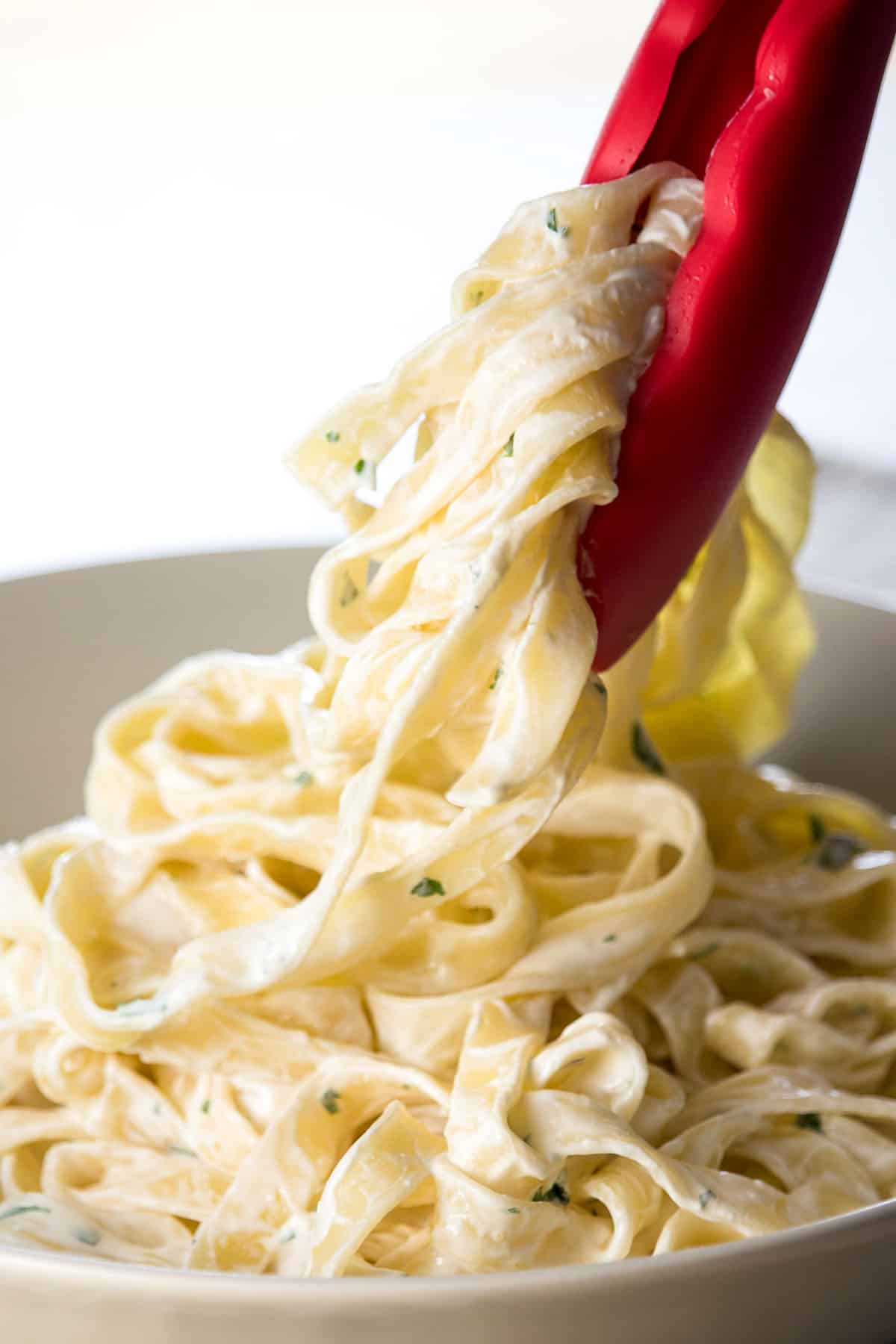
Garlic bread is an Italian food staple. I mean, who wants a plate of pasta like Fettuccine Alfredo or Spaghetti Bolognese without a basket of fresh, warm garlic bread to go with it? This recipe makes fantastic homemade garlic bread with just a few simple ingredients.
Why This Recipe Works
- Using butter instead of oil adds indulgent, delicious flavor.
- Fresh garlic instead of garlic powder gives it that distinctive buttery taste that can’t be beat.
- Sea salt adds an extra special touch of flavor and texture.
- The sprinkle of parmesan cheese is the perfect finishing touch.
Ingredient Notes
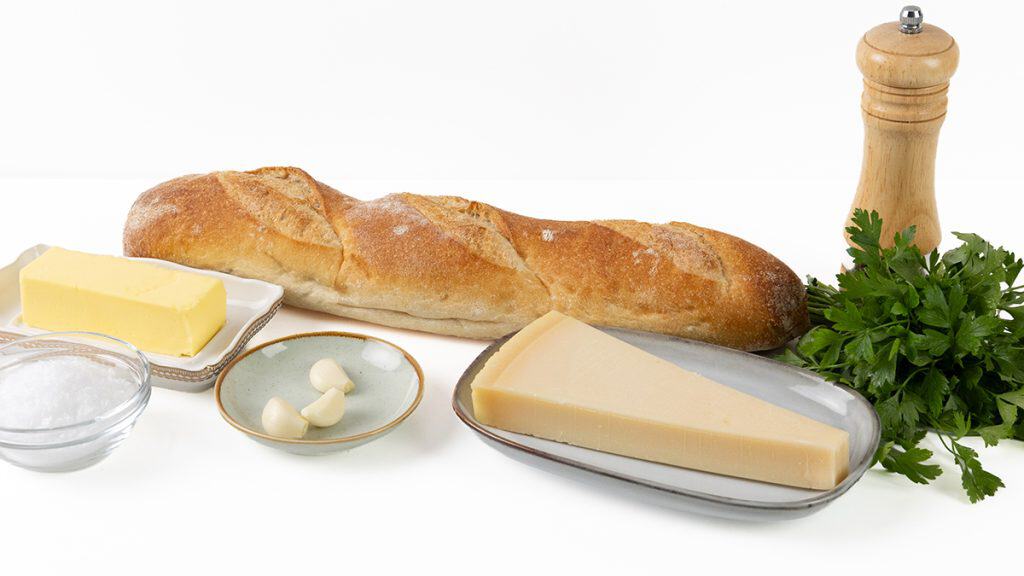
Italian Bread
Best Choice
Choose a fresh Italian loaf with a crisp but not overly thick crust and a soft, fairly open interior. It will absorb the garlic butter while still getting beautifully crisp around the edges.
Substitutions
A French loaf or baguette works well, although a narrow baguette will toast more quickly.
Butter
Best Choice
Unsalted butter gives you complete control over the seasoning, especially since we’re adding flaky sea salt separately. Let it soften completely before mixing.
Substitutions
Salted butter works, but reduce the added salt to taste.
Fresh Garlic
Best Choice
Use firm, fresh garlic cloves and finely mince or grate them so the garlic distributes evenly through the butter.
Substitutions
In a pinch, you can use garlic paste. Garlic powder will work, but you won’t get quite the same fresh garlic flavor.
Where to Find
Fresh garlic is available in the produce section of virtually any grocery store.
Parmesan Cheese
Best Choice
Freshly grated Parmesan melts and browns better than pre-shredded cheese and adds a savory, slightly nutty finish.
Substitutions
Pecorino Romano gives the bread a sharper, saltier flavor.
Where to Find
Look for wedges in the refrigerated specialty cheese section.
You can find the full, printable recipe at the top of this post, but you can read the detailed instructions with photos for each step below.
How To Make Homeade Garlic Bread
1
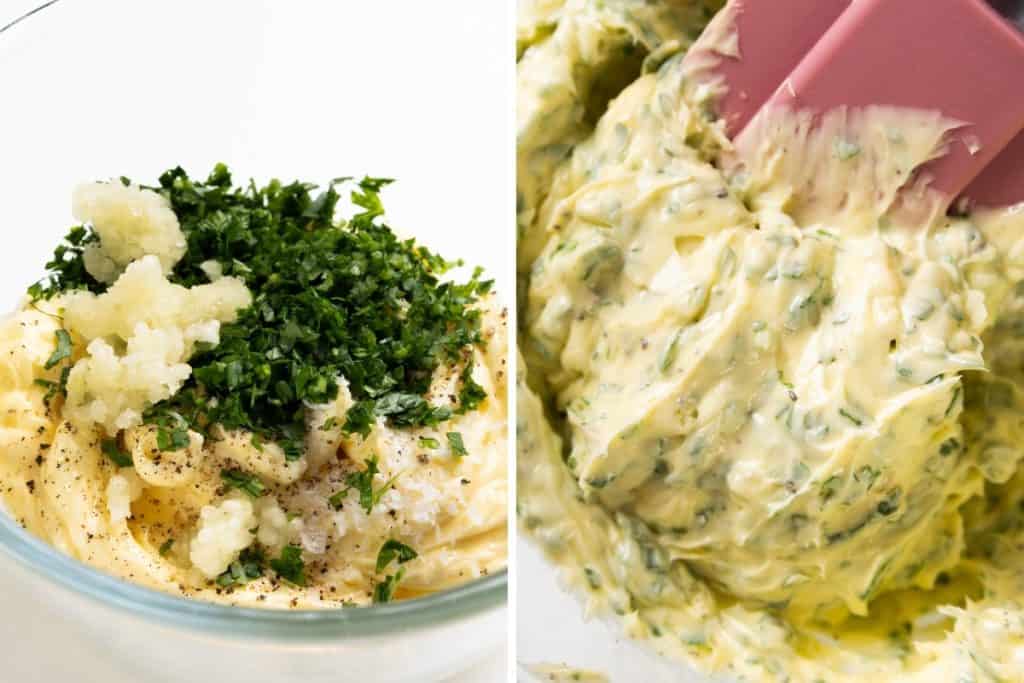
Make The Garlic Butter
Put the softened butter in a bowl with the minced garlic, 1 teaspoon of the flaky sea salt, pepper, and parsley. Mix it all together. The butter needs to be soft here, but not melted. If you can spread it easily without fighting with it, you’re good.
2
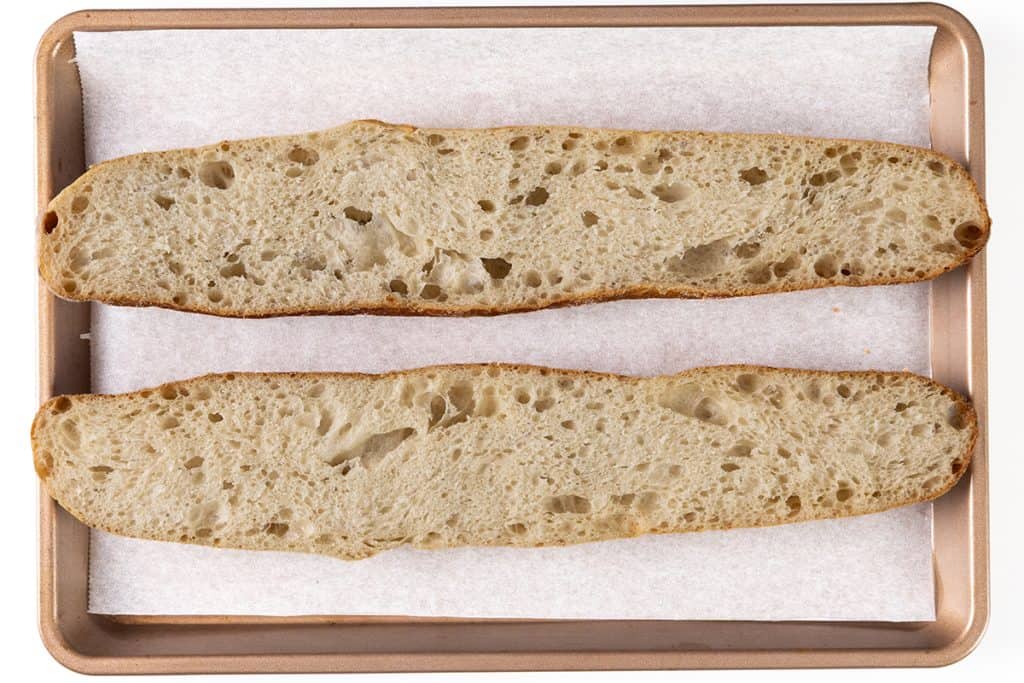
Prepare The Bread
Slice the Italian loaf in half lengthwise and place both halves cut-side up on a baking sheet. If the loaf isn’t sitting level, gently press the bottom just enough to stabilize it.
3
Butter All The Way To The Edges
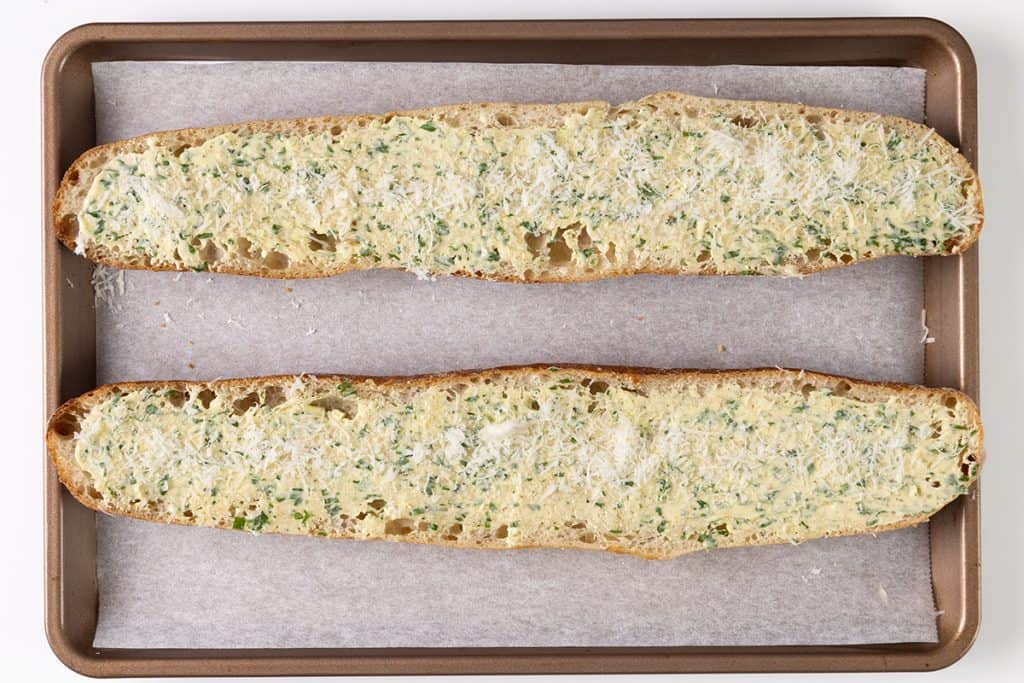
Give each cut side a good layer of garlic butter. Take it right out to the edges. I don’t tell people they absolutely have to use every bit of the butter because all bread is not created equal. A skinny French loaf and a wide ciabatta obviously aren’t going to need the same amount. Once the bread is nicely covered, stop.
And don’t throw away any garlic butter that’s left. Put it in the fridge. I often use mine for garlic butter pasta.
Sprinkle over the Parmesan and the rest of the flaky sea salt. That’s really all it needs.
4
Bake Until Golden
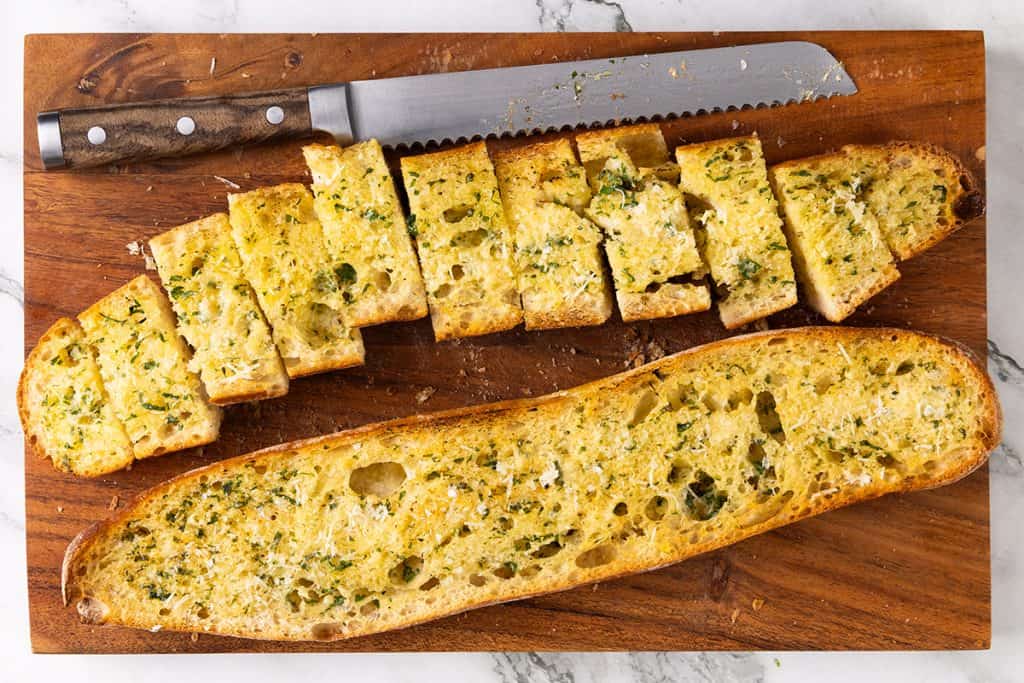
Bake at 400°F/200°C for 12 to 15 minutes. What I’m looking for here is a golden top and crisp edges. That’s more useful than watching the clock down to the second.
If you use convection, keep an eye on it because it’ll brown much faster.
Most of the time I don’t need to do anything else. If yours is cooked but still looks a little pale, you can give it a quick broil. Don’t walk away from it.
5
Slice And Serve
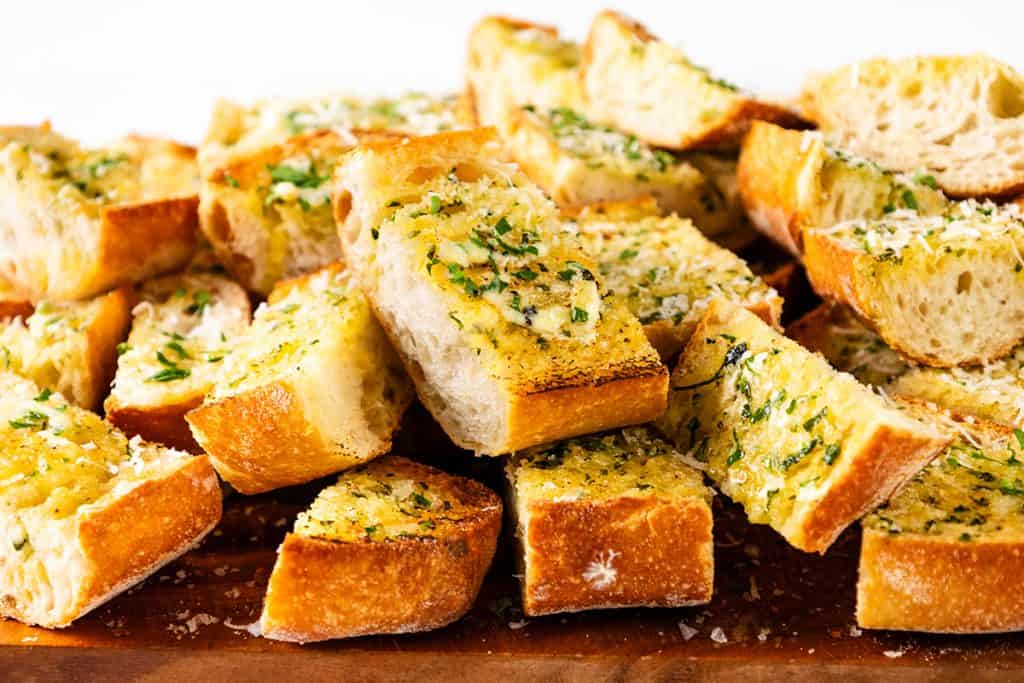
Let the bread sit for a minute or two before slicing. Cut it crosswise into pieces and serve while it’s still warm, crisp, and buttery.
Rate This Recipe
Recipe
Perfect Garlic Bread
Ingredients
- 8 oz baguette-style bread (such as Italian, French, or ciabatta)
- ½ cup unsalted butter (softened)
- 3 cloves garlic
- 1½ teaspoons flaked sea salt
- ¼ teaspoon fresh ground pepper
- 1 tablespoon parsley (chopped )
- 2 tablespoons Parmesan cheese
Instructions
- Preheat the oven to 400°F/200°C.
- Mix the softened butter, minced garlic, 1 teaspoon of the flaky sea salt, pepper, and parsley until well combined.
- Slice the bread in half lengthwise and place it cut-side up on a baking sheet.
- Spread a generous layer of garlic butter over the entire cut surface, right to the edges. Depending on the size and shape of your bread, you may not need all of it.
- Bake for 12 to 15 minutes, or until golden with crisp edges. If using convection, check it sooner. If the bread needs more color, briefly place it under the broiler and watch it closely.
- While hot, carefully slice each half crosswise into pieces and serve immediately.
Tips
Erren’s Top Tips
Don’t melt the butter. You want it soft enough to spread, that’s all. Go right to the edges. Those buttery, crisp edges are one of the best parts. Use your judgment with the butter. Spread a good layer over the bread. If there’s some left, save it rather than loading more and more onto the loaf. Fresh garlic is worth it here. You’re making garlic bread. This is the time to use it. Watch the bread, not just the timer. You’re looking for golden bread with crisp edges. Convection cooks differently. Check the bread sooner because it can brown surprisingly fast.Can I Make Garlic Bread Ahead?
Yes, but I wouldn’t do it the day before. You can butter the bread and get everything ready a few hours ahead, then cover it and put it in the refrigerator. That’s handy when I’m making it for a gathering because it’s one less thing to deal with when everyone is there. I don’t like leaving it assembled for too long, though. The butter needs to stay refrigerated, and bread doesn’t improve while it’s sitting around. I’d rather make it a few hours ahead and bake it just before we’re eating.Want Cheesy Garlic Bread?
Add mozzarella before it goes into the oven. That’s the version I’d make if I actually wanted cheesy garlic bread. The small amount of Parmesan in the regular recipe is there for flavor and isn’t meant to give you a big layer of melted cheese.What To Do With Leftover Garlic Butter
If your loaf doesn’t need all the garlic butter, cover what’s left and keep it in the refrigerator. My favorite way to use it is ridiculously easy: garlic butter pasta. Melt it into hot pasta, and you’ve already got the garlic, butter, herbs, and seasoning in there. You can also use it on vegetables or another loaf of bread.Storage & Reheating
Keep leftover garlic bread covered in the refrigerator. I prefer reheating it in the oven because you can get the edges crisp again. The microwave will heat it, but you’ll lose that texture. Save to favoritesYour saved recipes will be right here waiting for you every time you visit, so you can easily find and make the meals you love.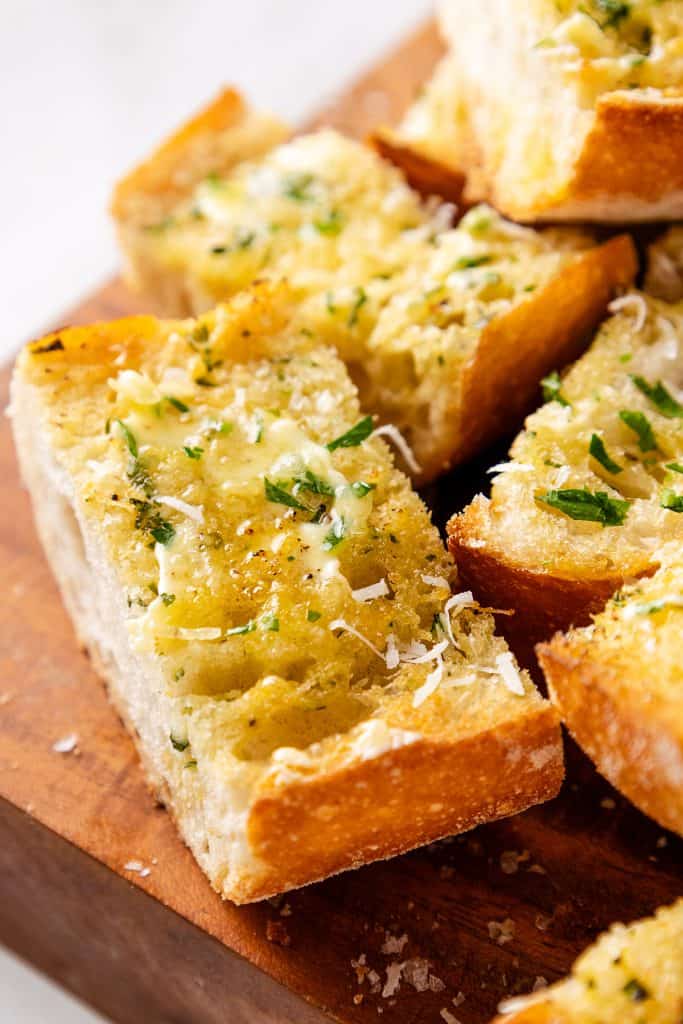
FAQs
What is the best bread for garlic bread?
A medium-sized Italian or French loaf is ideal because it has enough structure to become crisp without turning hard and a soft interior that absorbs the garlic butter. Very dense artisan loaves can work, but they’ll produce a chewier result.
Should you use salted or unsalted butter for garlic bread?
Either works, but unsalted butter makes it easier to control the seasoning. This recipe adds flaky sea salt directly to the butter and over the bread, so unsalted butter prevents the finished bread from becoming overly salty.
Why does my garlic bread get soggy?
Too much melted butter or an especially soft, thin loaf can make garlic bread soggy. Using softened rather than melted butter and baking the bread cut-side up helps the surface toast while the butter gradually melts into the crumb.
Can I make garlic bread ahead of time?
Yes. Assemble the bread with the garlic butter, salt, and Parmesan, then cover and refrigerate it until you’re ready to bake. For longer storage, freeze the prepared bread and bake it directly from frozen.
Can you freeze homemade garlic bread?
Absolutely. Garlic bread freezes particularly well before baking. Assemble it, freeze until firm, wrap tightly, and store for up to 3 months. It can go straight from the freezer to the oven.
How do you reheat garlic bread and keep it crispy?
The oven is your best option. Reheat garlic bread at 350°F (180°C) until warmed through. The dry heat helps restore the crisp exterior much better than a microwave.
Can I use garlic powder instead of fresh garlic?
You can, although the flavor will be different. Fresh garlic gives this recipe its characteristic sharp, aromatic garlic flavor. Garlic powder produces a milder, more evenly distributed flavor and can be useful when fresh garlic isn’t available.











Leave a Reply