


This site runs ads and generates income from affiliate links. Read my disclosure policy.
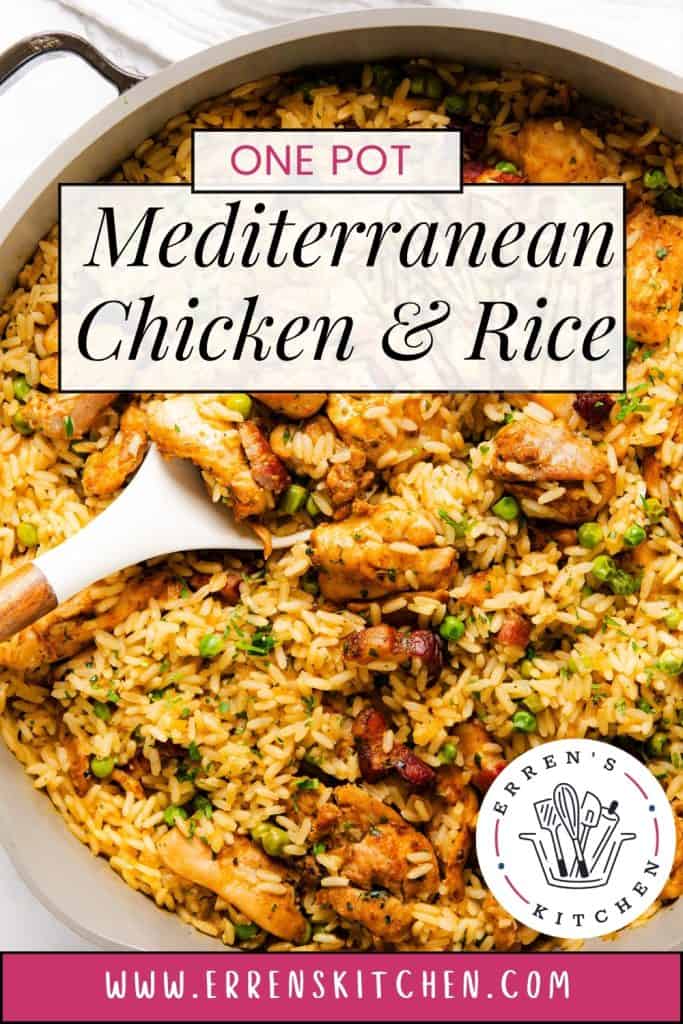
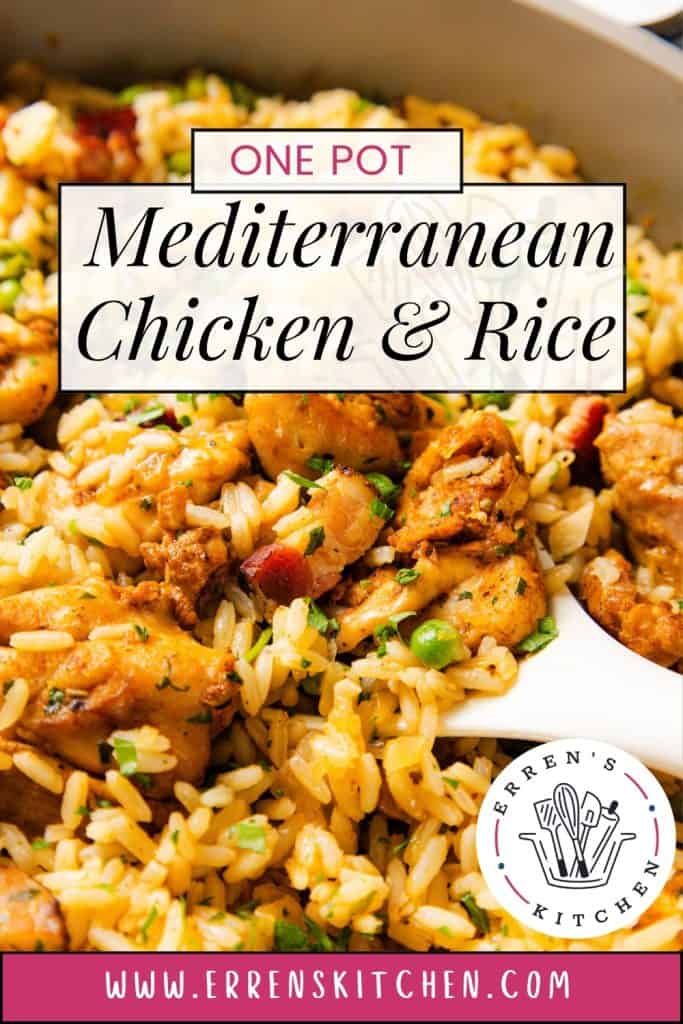
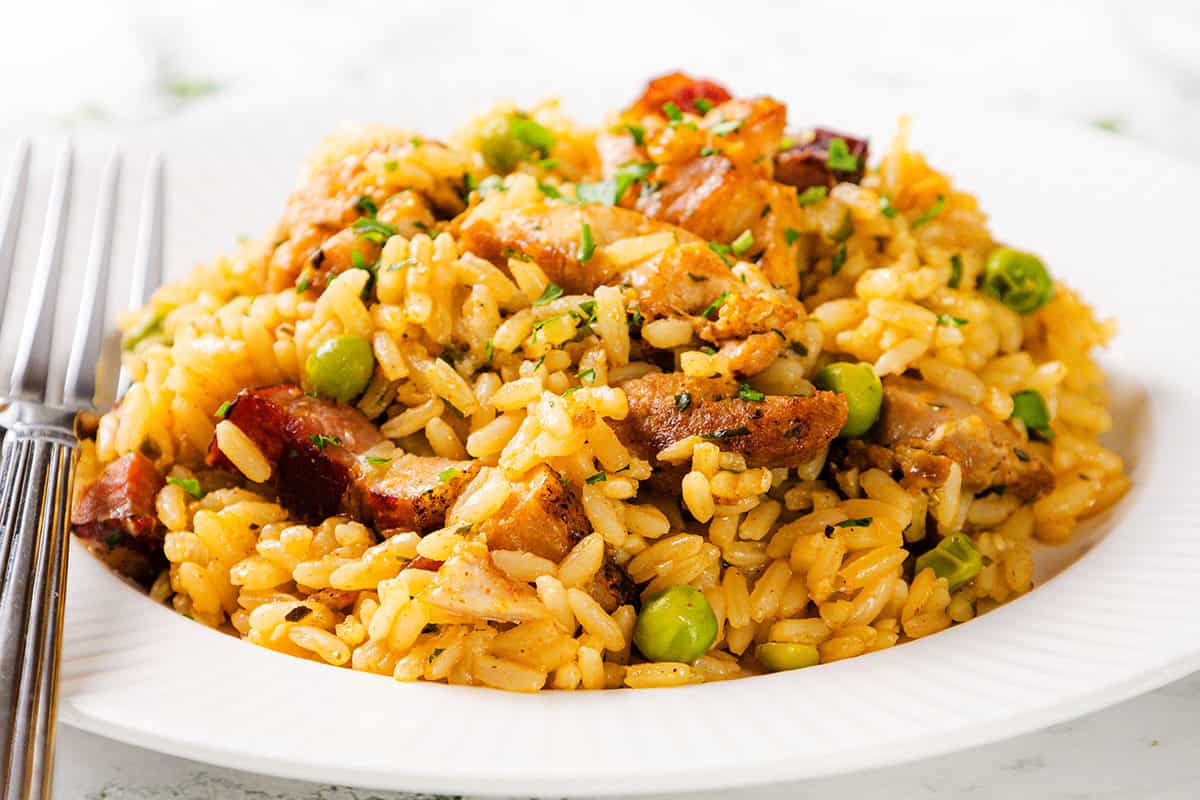
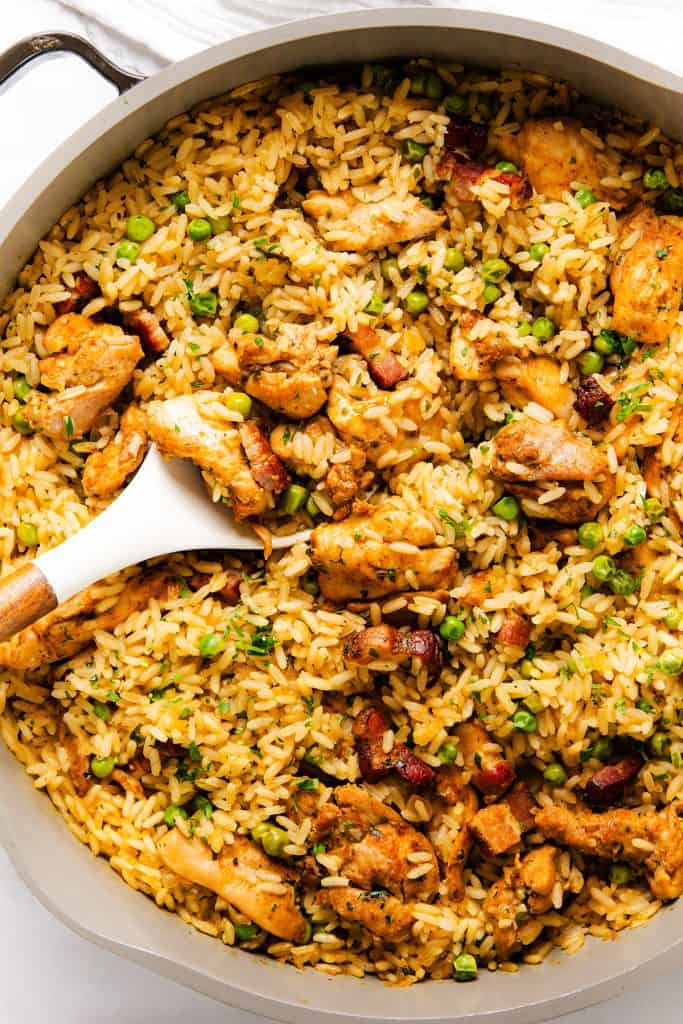
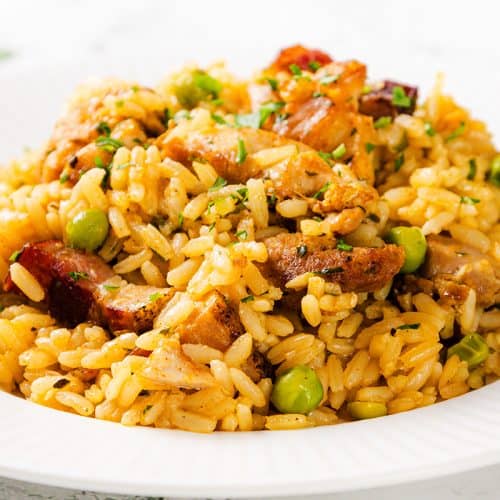
One-Pot Mediterranean Chicken and Rice with pancetta, garlic, paprika, peas, and lemon makes a flavorful, satisfying dinner in one skillet.
Know Before You Scroll

What You’ll Need
Boneless chicken thighs, pancetta, parboiled long-grain rice, onion, garlic, paprika, white wine, chicken stock, frozen peas, parsley, and lemon.
Flavor Profile
Savory and garlicky with warm paprika, salty pancetta, oregano, and a fresh lemon finish.
Difficulty Level
Easy to moderate. Nothing is complicated, but taking the time to brown the chicken properly makes a big difference.
Equipment Needed
A large, deep 12-inch skillet with a tight-fitting lid. The wide surface gives the chicken room to brown and allows the rice to cook evenly.
Top Tip
Don’t rush the chicken. Let those small pieces get really brown. The browned bits left in the skillet become part of the flavor base for the rice.
Ingredient Swaps
You can use basmati rice, but don’t use the same amount of stock. The 4-cup liquid measurement was developed specifically for parboiled long-grain rice.
In The Test Kitchen
I wanted this to be the kind of chicken and rice dinner where the rice is every bit as good as the chicken.
The trick is building the flavor in layers. I start pancetta in a cold pan so the fat has time to render, then use that fat to brown the chicken. The onions cook right over all those browned bits, the rice gets toasted with garlic and paprika, and then it absorbs white wine before the stock goes in.
I also give the rice a head start before returning the chicken. Since the chicken is cut into small pieces and already well browned, adding it later keeps it juicy instead of simmering it for the entire cooking time.
The final hit of fresh lemon is important, too. I use zest on the chicken but save the juice for the end. Cooking lemon juice over high heat can make its flavor bitter, while adding it after cooking gives the whole dish the brightness it needs.
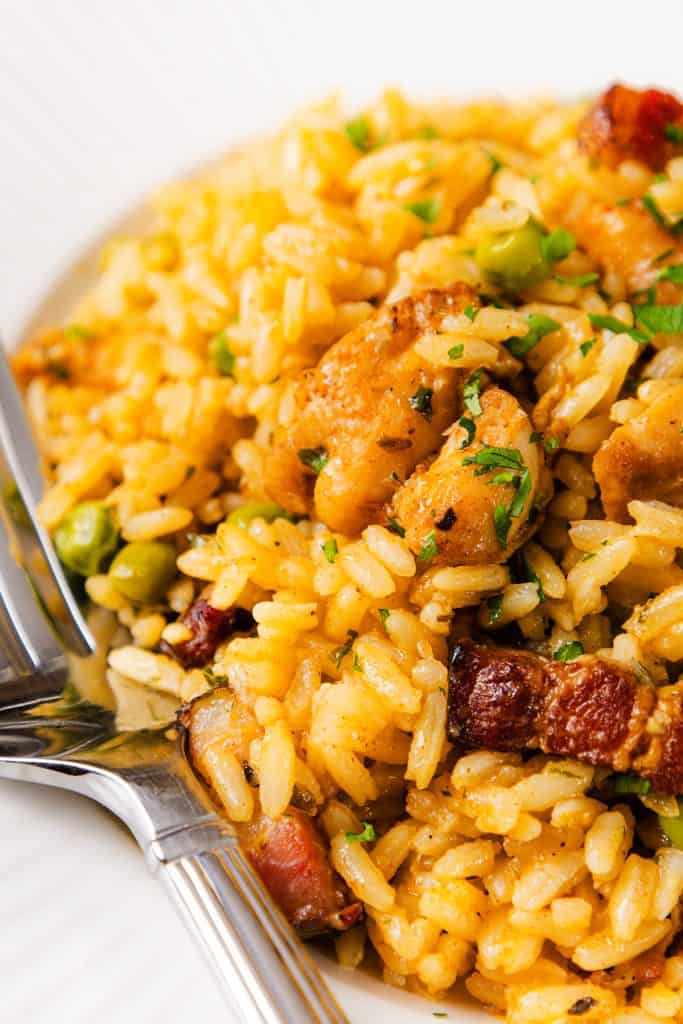
Ingredient Notes
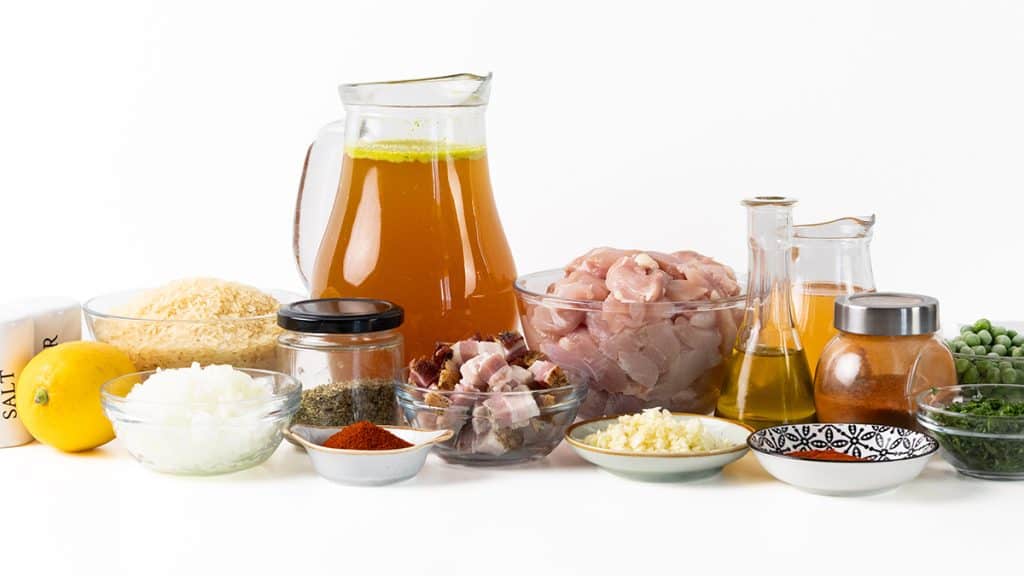
Chicken Thighs
Best Choice
Boneless, skinless chicken thighs stay juicy during the initial browning and final few minutes of cooking with the rice.
Substitutions
Boneless chicken breast can be used, but take extra care not to overcook it. Because breast meat is leaner, I’d cut the pieces slightly larger and rely on temperature rather than cooking time to determine when they’re done.
Pancetta
Best Choice
Diced pancetta adds both flavor and cooking fat. Starting it in a cold skillet allows the fat to render gradually before the pancetta gets too brown.
Substitutions
Bacon can technically work, but it will give the dish a noticeably smokier flavor.
Parboiled Long-Grain Rice
Best Choice
I use parboiled long-grain rice because the grains stay separate and fluffy even after being toasted, simmered in stock, and cooked with the chicken.
Substitutions
Basmati can work, but it requires less liquid. Don’t substitute it using the recipe’s 4 cups of stock without adjusting the ratio.
Paprika
Best Choice
I use both sweet and smoked paprika, but for different jobs. Sweet paprika seasons the chicken without overpowering it, while a smaller amount of smoked paprika adds depth to the rice.
Substitutions
If you don’t have smoked paprika, use additional sweet paprika. You’ll lose a little smoky depth, but the dish will still work.
You can find the full, printable recipe at the top of this post, but you can read the detailed instructions with photos for each step below.
Step By Step Instructions
1
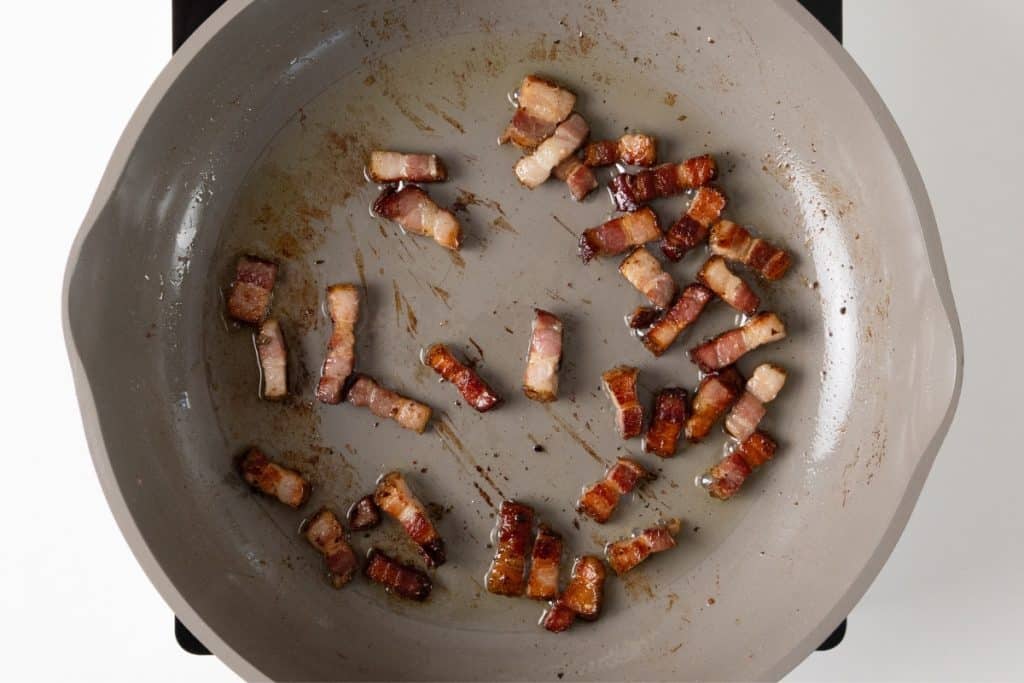
Render the Pancetta and Season the Chicken
Add the pancetta to a cold skillet before turning on the heat. This gives the fat time to render slowly instead of immediately browning the outside.
While it cooks, season the bite-sized chicken thighs with sweet paprika, oregano, lemon zest, optional cayenne, a little salt, and black pepper.
Once the pancetta is browned, remove it and taste a cooked piece before adding more salt to the dish. Some pancetta is much saltier than others.
Pour off the excess fat, leaving about 2 tablespoons in the skillet.
2
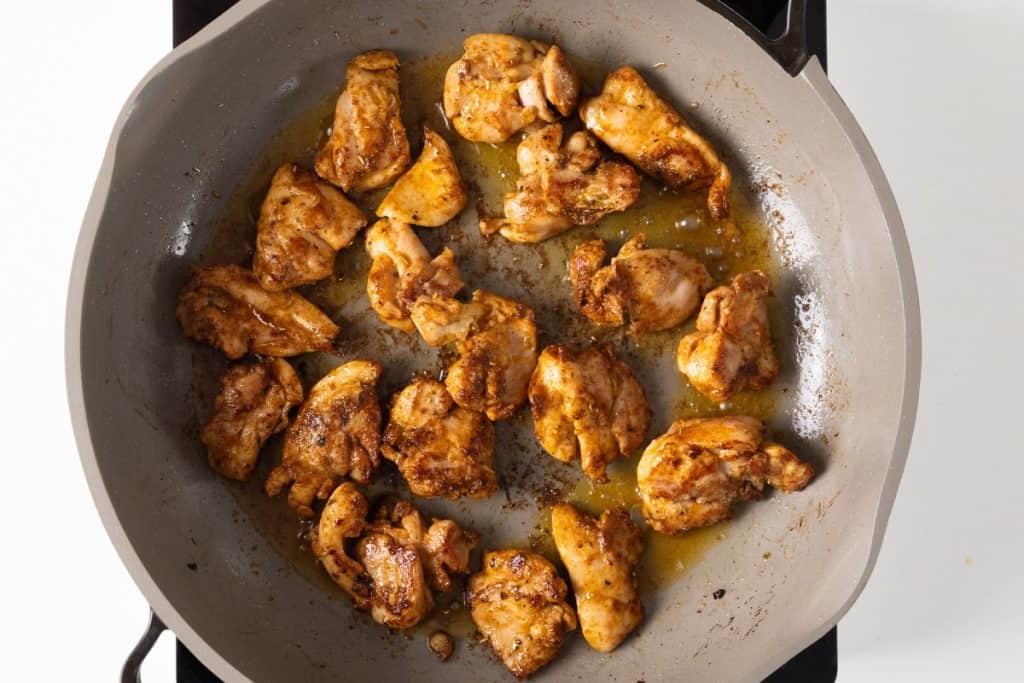
Get the Chicken Really Brown
Brown the chicken in batches over medium-high heat.
Give the pieces some room and leave them alone long enough to develop good color. If you crowd the skillet, the chicken releases moisture and starts steaming instead.
You’re not trying to cook the chicken through yet. You’re creating browned edges on the chicken and, just as importantly, flavorful browned bits on the bottom of the skillet.
Transfer the chicken to a plate and keep any juices it releases.
3
Build the Rice Base
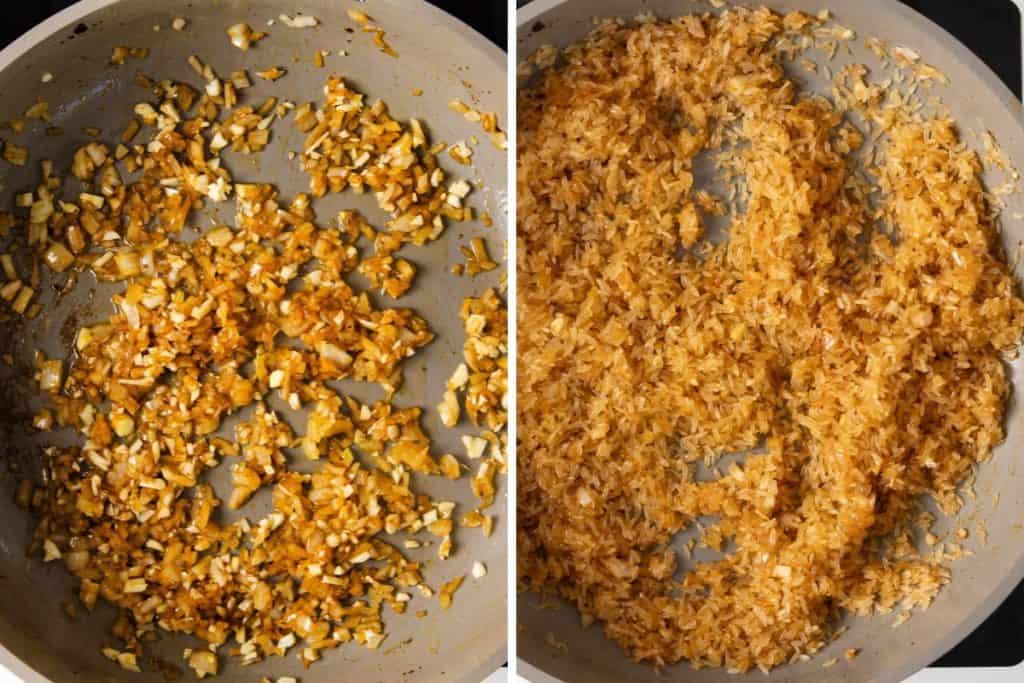
Add a little olive oil if the pan looks dry, then cook the onion until it’s softened and just beginning to turn golden.
Add the garlic only at the end and cook just until fragrant. The skillet has been running fairly hot, and adding minced garlic too early gives it plenty of opportunity to burn.
Stir in the parboiled rice and paprikas and cook for about a minute, coating the grains in the flavorful fat.
4
Let the Rice Absorb the Wine
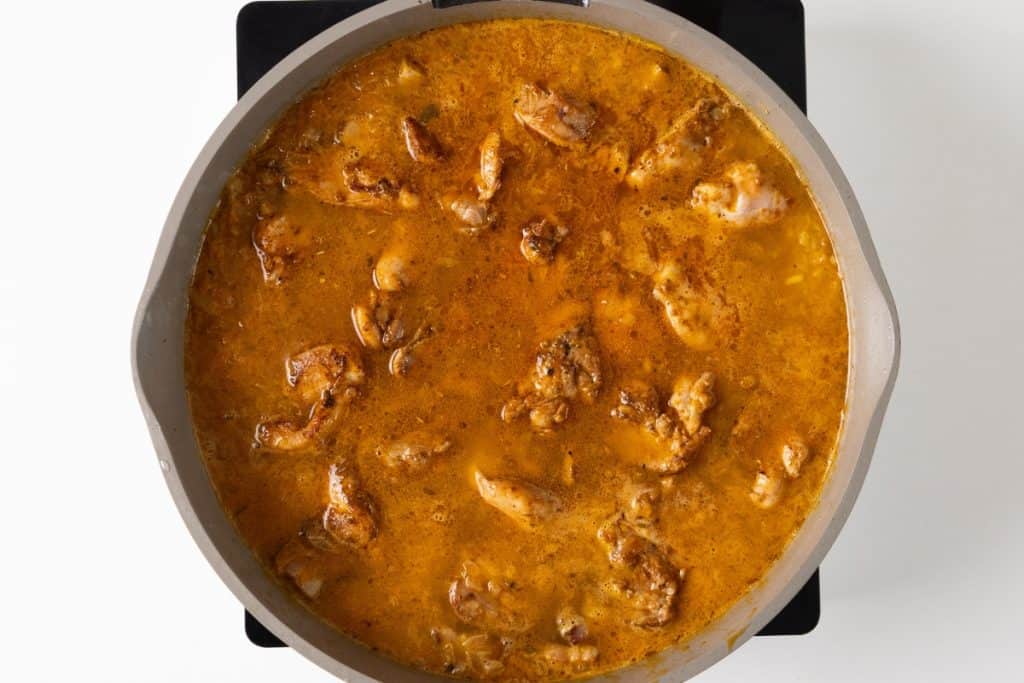
Pour in the white wine and cook until it has been completely absorbed by the rice.
This gives the wine time to lose its raw alcohol flavor while the rice absorbs it before the stock is added.
Add the chicken stock and cooked pancetta and bring everything to a boil. Reduce to a low simmer and cover.
From this point on, don’t stir the rice.
5
Give the Rice a Head Start
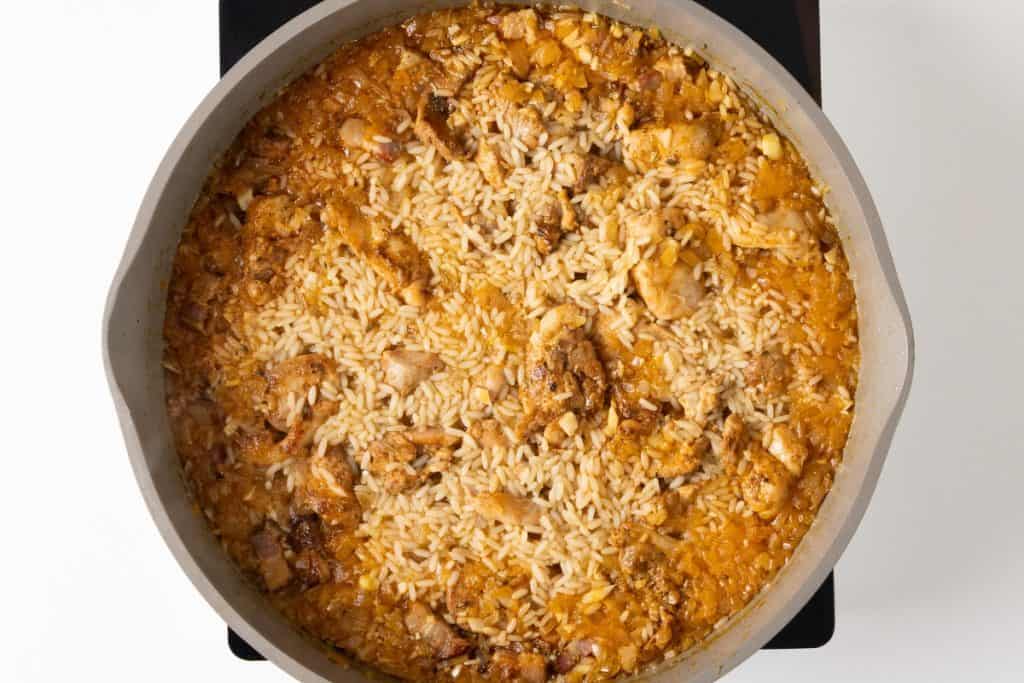
Let the rice cook on its own for about 8 minutes before returning the chicken.
Because the chicken pieces are small and have already been browned, they don’t need to simmer for the entire 15–20 minutes it takes the parboiled rice to cook.
Nestle the chicken into the rice and pour in every bit of juice from the plate. Cover again and cook until the rice is tender and the chicken reaches 165°F/74°C.
6
Add the Peas at the Very End
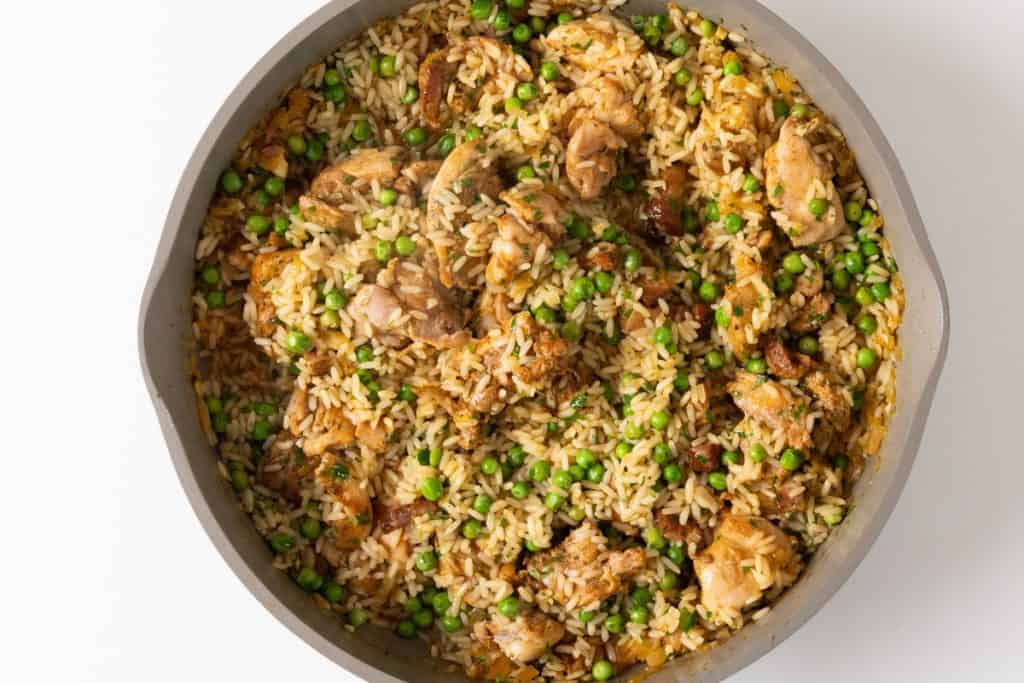
Add the frozen peas during only the final 3–5 minutes of cooking.
Frozen peas are already tender and don’t need much cooking. Adding them late keeps them bright and gives them some texture instead of turning them soft and mushy.
Remove the skillet from the heat and finish with parsley and 1 tablespoon fresh lemon juice. Gently fluff everything together, taste, and add more lemon, salt, or pepper if needed.
Recipe
One-Pot Mediterranean Chicken & Rice
Ingredients
- 4 oz pancetta (diced)
- 2 lb boneless, skinless chicken thighs (cut into small bite-sized pieces)
- 2 teaspoons sweet paprika
- 1 teaspoon dried oregano
- Zest of 1 lemon
- ¼ teaspoon cayenne pepper (optional, or more to taste)
- Salt and freshly ground black pepper
- Olive oil (as needed)
- 1 medium yellow onion (finely chopped)
- 6 cloves garlic (minced)
- 2 cups parboiled long-grain rice
- ½ teaspoon smoked paprika
- ½ teaspoon sweet paprika
- ½ cup dry white wine
- 4 cups chicken stock
- 1 cup frozen peas
- ¼ cup chopped fresh flat-leaf parsley
- 1 tablespoon fresh lemon juice (plus more to taste)
Instructions
- Season the chicken with the 2 teaspoons sweet paprika, oregano, lemon zest, optional cayenne, a light amount of salt, and black pepper. Set it aside while you prep everything else.
- Place the pancetta in a cold, deep 12-inch skillet with a tight-fitting lid. Set over medium heat and cook until the fat has rendered and the pancetta is browned. Transfer the pancetta to a plate.
- Taste the cooked pancetta for saltiness so you know how cautiously to season the rest of the dish.
- Pour off the excess rendered fat, leaving 2 tablespoons in the skillet. If the pancetta hasn’t rendered quite enough, make up the difference with olive oil.
- Increase the heat to medium-high. Brown the chicken in batches, allowing the pieces to get deeply golden rather than simply cooked on the outside. Transfer to a plate. Don’t cook the chicken through at this point.
- Add a little olive oil if the skillet looks dry. Add the onion and cook until softened and just beginning to turn golden, scraping up the browned chicken bits as it cooks.
- Add the garlic and cook briefly at the end of the onion’s cooking time, just until fragrant. Don’t let it brown.
- Add the parboiled rice, ½ teaspoon smoked paprika and ½ teaspoon sweet paprika. Cook for about a minute, stirring to coat and lightly toast the grains.
- Pour in the white wine. Cook, stirring, until the wine has fully absorbed into the rice.
- Add the chicken stock and browned pancetta. Bring to a boil, reduce to a low simmer, cover and do not stir.
- Cook for 8 minutes.
- Quickly lift the lid and nestle the browned chicken into the rice, pouring in all the accumulated juices from the plate. Cover immediately and continue cooking for approximately 7–10 minutes, or until the rice is tender and the chicken reaches 165°F/74°C.
- Add the frozen peas during the final 3–5 minutes so they’re heated through without becoming soft and mushy.
- Once the rice is tender and the liquid has been absorbed, remove from the heat. Add the parsley and 1 tablespoon fresh lemon juice. Gently fluff everything together.
- Taste and add more lemon juice, salt and pepper as needed.
Tips
Erren’s Top Tips
Start pancetta in a cold skillet. Gentle rendering gives you more flavorful fat to use for browning the chicken. Keep only 2 tablespoons of pancetta fat. It’s fantastic for flavor, but keeping all of it can leave the finished rice greasy. Brown in batches. With small pieces of chicken, good browning happens quickly—as long as there’s enough room in the skillet. Don’t waste the fond. The browned bits left behind by the pancetta and chicken aren’t something to clean away. Cooking the onion over them pulls that flavor into the rice. Add garlic late. Minced garlic burns much faster than onion cooks, so wait until the onion is almost ready. Don’t stir once the rice is covered. Let it simmer undisturbed so the grains remain separate rather than becoming overly starchy. Taste before adding more salt. Pancetta and chicken stock can both be salty. Taste a piece of the cooked pancetta, season lightly at the beginning, and make your final adjustment after the rice is cooked. Save the lemon juice for the end. Lemon zest can handle the heat and perfumes the chicken as it cooks. Fresh juice added off the heat gives you brighter flavor and avoids the bitterness citrus juice can develop when cooked too aggressively.Variations & Add-Ins
Make it spicier: Increase the cayenne beyond the optional ¼ teaspoon if you want more noticeable heat. Skip the peas: They’re useful here for a little sweetness and color, but the chicken and rice don’t depend on them. Leave them out if you’re cooking for someone who, like me, would generally prefer peas didn’t exist. 😏 Add more vegetables: I’d serve vegetables alongside this rather than loading the skillet with peppers or tomatoes. Those additions change the character of the rice and take the recipe in a different direction. Without wine: Replace the wine with additional chicken stock. You won’t get quite the same depth, but the recipe will still work.Storage & Freezing
Store leftovers in an airtight container in the refrigerator for up to 3 days. Reheat gently until the chicken and rice are piping hot. Rice dries as it sits, so add a small splash of chicken stock or water before reheating if needed. You can freeze the chicken and rice in an airtight freezer-safe container for up to 3 months. Thaw overnight in the refrigerator before reheating. Save to favoritesYour saved recipes will be right here waiting for you every time you visit, so you can easily find and make the meals you love.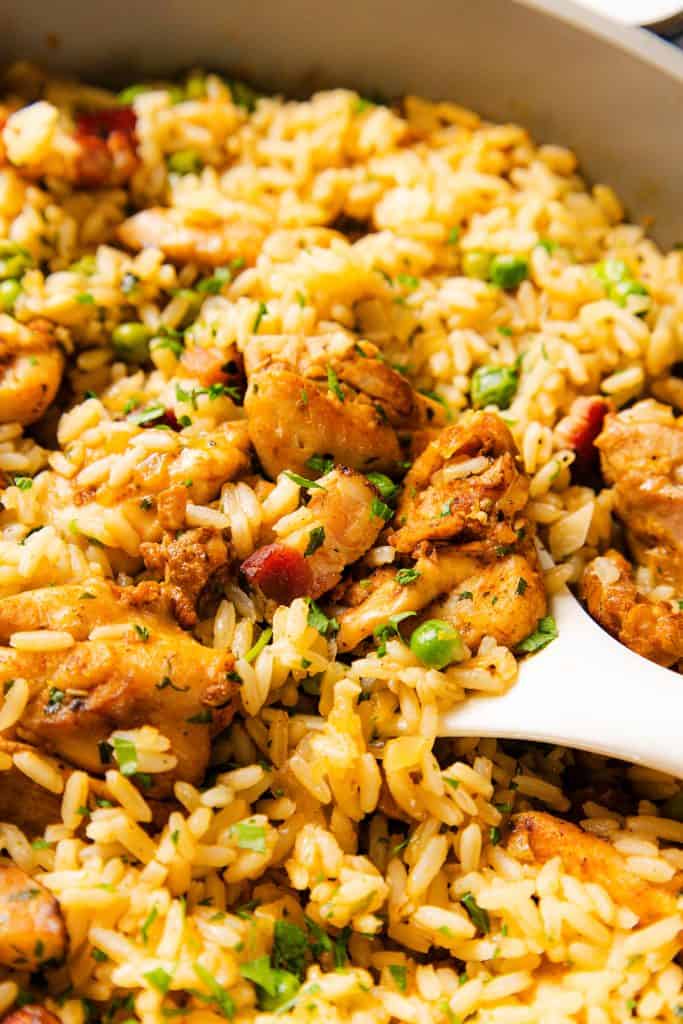
FAQs
Can I use a different type of rice?
Yes, but you need to adjust the liquid. This recipe uses 2 cups of parboiled long-grain rice with 4 cups of chicken stock. Basmati absorbs liquid differently, so don’t simply swap it into the recipe using the same stock measurement.
Why do you cook the chicken separately first?
Browning creates flavor both on the chicken and on the bottom of the skillet. The chicken is then removed so the rice can get a head start before the meat finishes cooking with it. This prevents small pieces of chicken from simmering for the entire rice cooking time.
Why shouldn’t I stir the rice?
Stirring agitates the grains and releases more starch. Leaving the rice undisturbed while it simmers helps give us the separate, fluffy grains we’re looking for in this recipe.
Can I use chicken breasts?
Yes, although thighs are more forgiving. Chicken breast is leaner and can dry out more easily, so don’t overcook it. Cook to an internal temperature of 165°F/74°C.
Why add the lemon juice after cooking?
The zest gives the chicken citrus aroma without adding much acidity or moisture during browning. Adding fresh lemon juice at the end keeps its flavor bright and lets you control exactly how acidic the finished dish becomes.
How do I know when the dish is ready?
Don’t rely solely on the clock. The rice should be tender with separate, fluffy grains, the cooking liquid should be absorbed, and the chicken should reach 165°F/74°C. The peas should still be bright rather than soft and dull.











Leave a Reply