


This site runs ads and generates income from affiliate links. Read my disclosure policy.
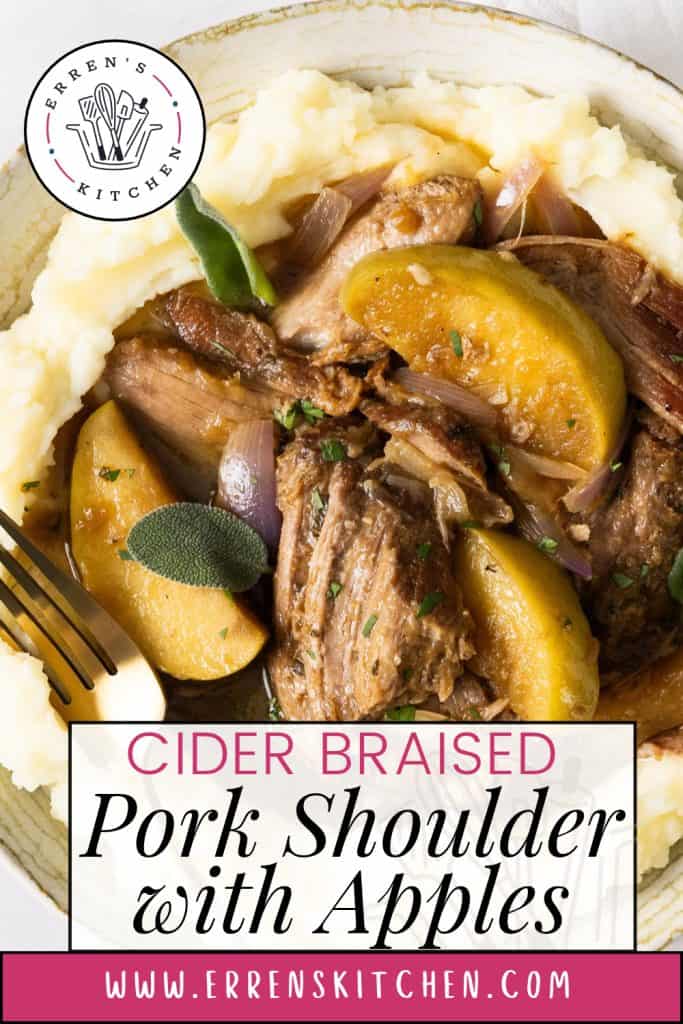
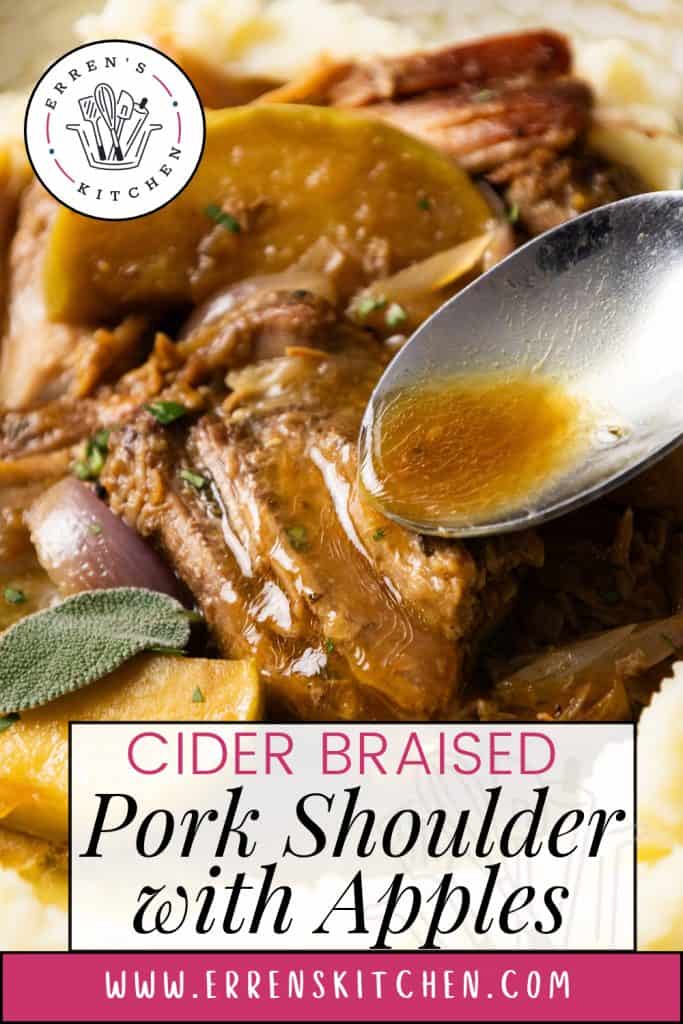
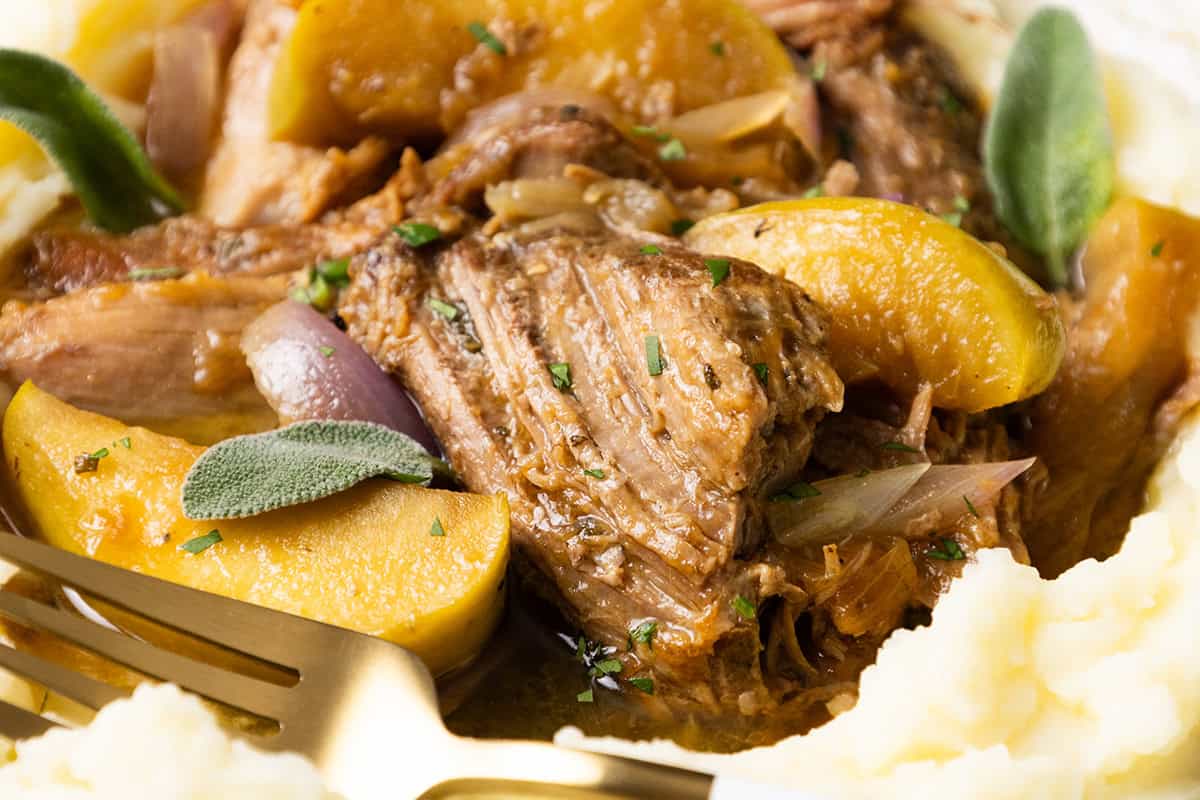
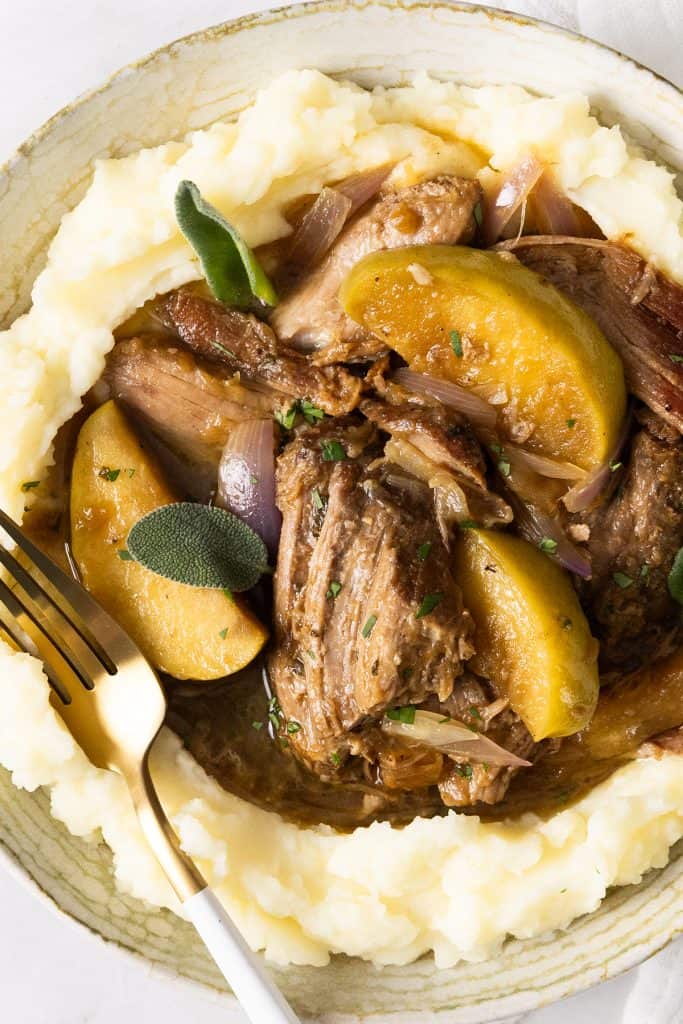
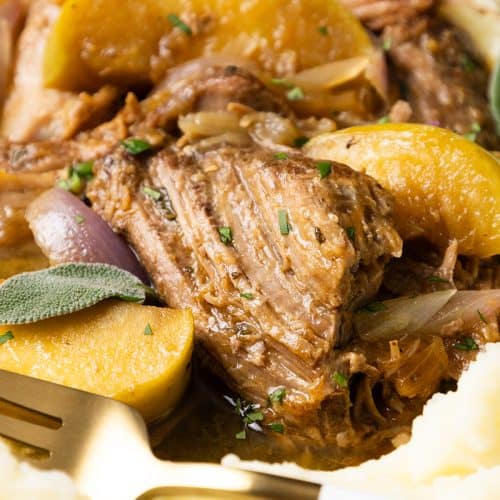
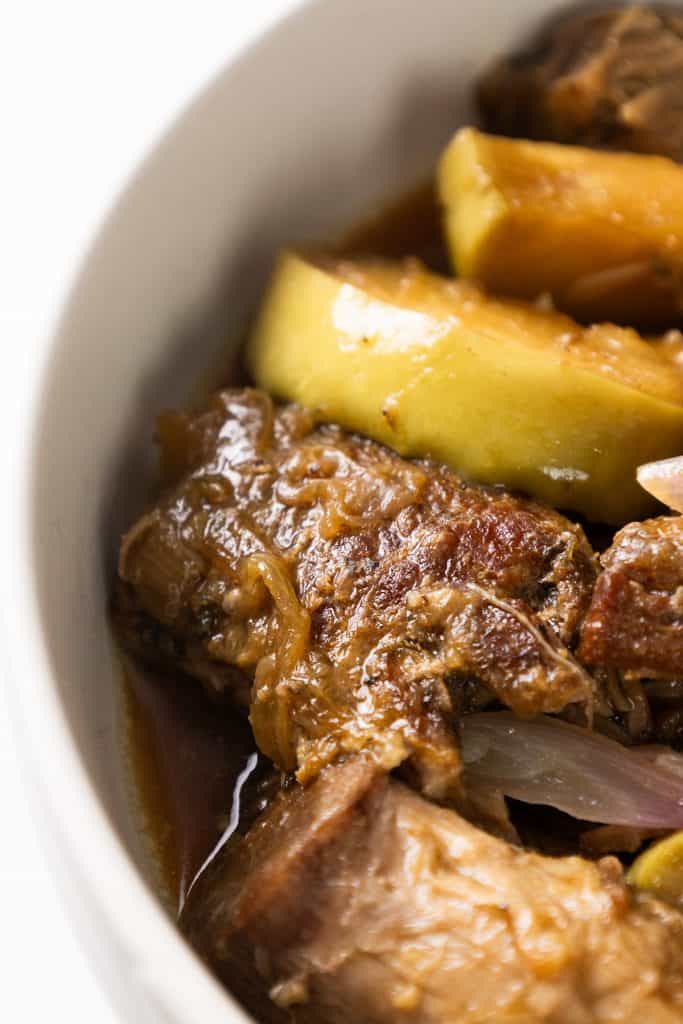
Cider-braised pork shoulder with apples, shallots and sage in a savory sauce. The apples go in near the end to keep their shape.
Know Before You Scroll

What You’ll Need
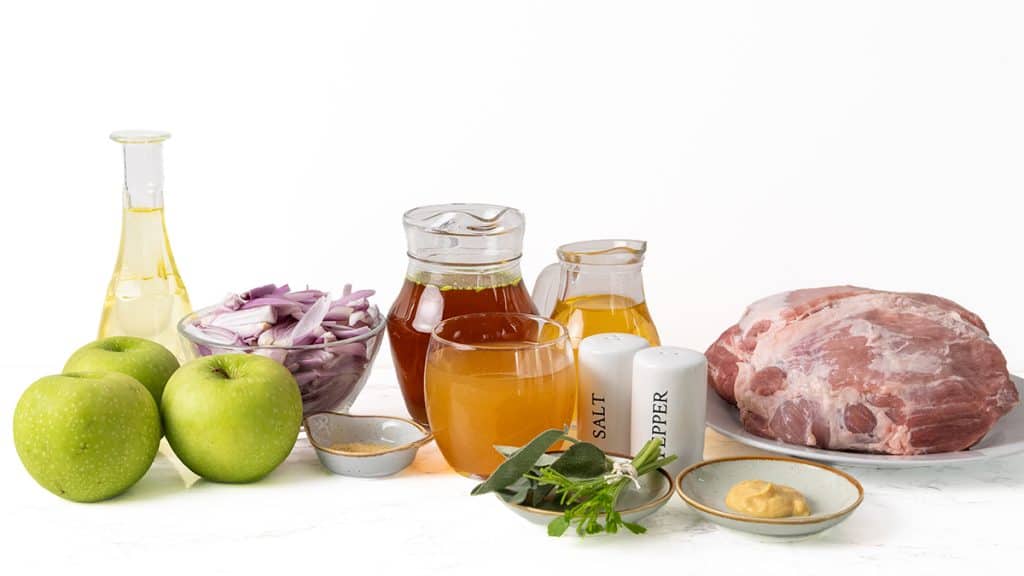
Boneless pork shoulder, nonalcoholic apple cider, Granny Smith apples, shallots, dry white wine, low-sodium chicken stock, fresh sage, parsley stems, mustard powder, Dijon, neutral oil, fine table salt, and black pepper.
Flavor Profile
Rich, savory pork with fruity apple cider, tender shallots, sage, and tart apple wedges. A little Dijon rounds out the sauce.
Difficulty Level
Easy to moderate. Browning the pork takes some attention, but the oven handles the long braise.
Equipment Needed
A heavy 6-quart Dutch oven with a tight-fitting lid and kitchen twine.
Top Tip
Check the pork for tenderness before taking it out. A fork should slide into the thickest parts and twist easily.
Time-Saving Tips
Slice the shallots and prepare the herbs ahead. You can also cook the pork and sauce a day ahead, then cook the apples when reheating.
Ingredient Swaps
Pink Lady apples can replace Granny Smith. Choose pork shoulder for this recipe; leaner cuts need a different cooking method.
This cider-braised pork shoulder cooks slowly with shallots, white wine, and sage until the meat pulls apart easily. The apples go in near the end, giving you tender wedges to serve alongside the pork and plenty of savory sauce.
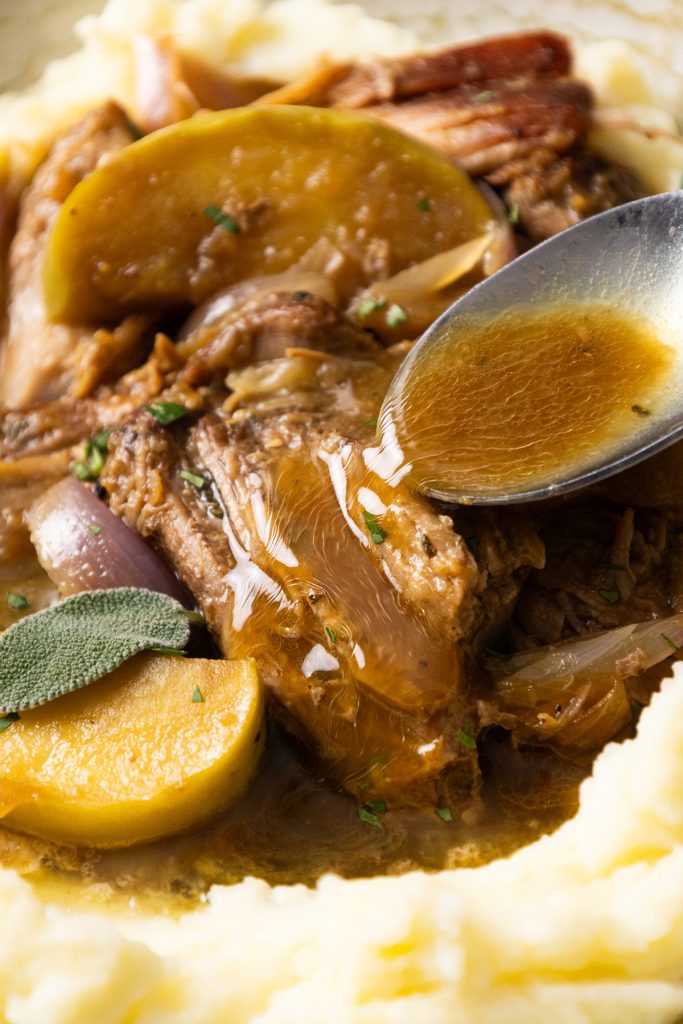
Serve it over mashed potatoes and let them catch all those juices. It’s a lovely Sunday dinner, with most of the cooking time spent in the oven.
In the Test Kitchen
I wanted plenty of apple flavor here while keeping the sauce savory. The cider brings sweetness, so it shares the pot with dry white wine, chicken stock, shallots, and herbs. Browning the pork first gives the sauce a good foundation before the slow cooking begins.
Mustard goes in twice: a little powder cooks with the shallots, and Dijon is stirred in at the end. Neither needs to dominate—it’s there to bring the sauce together.
The apples wait until the pork is cooked. That lets them soften in the sauce without spending hours in the oven and breaking down. You get tender pork, recognizable apple wedges, and a sauce worth spooning over everything.
Ingredient Notes
Pork
Best Choice
Use a well-marbled, boneless pork shoulder, often labeled Boston butt. Remove the skin and trim thick outer fat, leaving the marbling within the meat.
Substitutions
Bone-in shoulder can be used, but its weight and cooking time will differ. Pork loin and tenderloin are too lean for this long braise.
Apples
Best Choice
Granny Smith apples provide a tart contrast to the rich pork. Cut them into even ¾-inch wedges, peeling them if preferred.
Substitutions
Pink Lady apples are another firm option. Check them early, as cooking time varies with variety and ripeness.
Sauce Ingredients
Best Choice
Use plain, nonalcoholic, unspiced apple cider, low-sodium chicken stock, and a dry, unoaked white wine, such as Pinot Grigio or an unoaked Chardonnay. Mustard powder cooks into the sauce; smooth Dijon adds a little bite at the finish.
Substitutions
Low-sodium chicken broth can replace the stock. Hard cider, spiced cider, and apple cider vinegar are not direct replacements for the apple cider.
Where to Find
Look for plain cider in refrigerated produce displays or seasonal displays. Mustard powder, sometimes labeled ground mustard, is in the spice aisle.
Shallots and Herbs
Best Choice
Use firm shallots, fresh sage, and flat-leaf parsley stems. Peel the shallots and slice them lengthwise, finely chop the sage, and tie the parsley stems together so they’re easy to remove after braising.
Substitutions
Yellow onion can replace the shallots, though its flavor is stronger. Keep the fresh herbs for the intended flavor.
Use the recipe card below for the full ingredient quantities and printable instructions, or follow the photo stages below.
Step-by-Step Instructions
1
Prepare and Brown the Pork
Preheat the oven to 325°F. If the shoulder opens out, fold it back into shape and tie with kitchen twine. Otherwise, leave it as it is. Pat dry and season all over with salt and pepper.
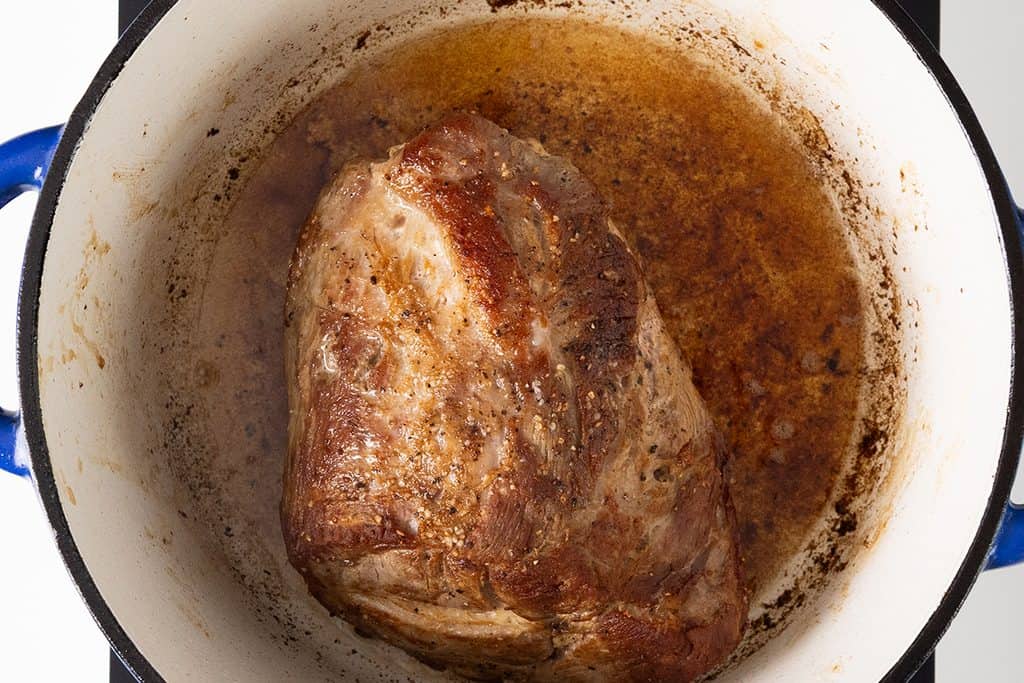
Heat the oil in a large Dutch oven over medium-high heat. Brown the pork on all sides, allowing about 15–20 minutes total. Let a deep golden crust develop before turning, and lower the heat if the browned bits start to burn. Transfer to a plate.
2
Cook the Shallots and Herbs
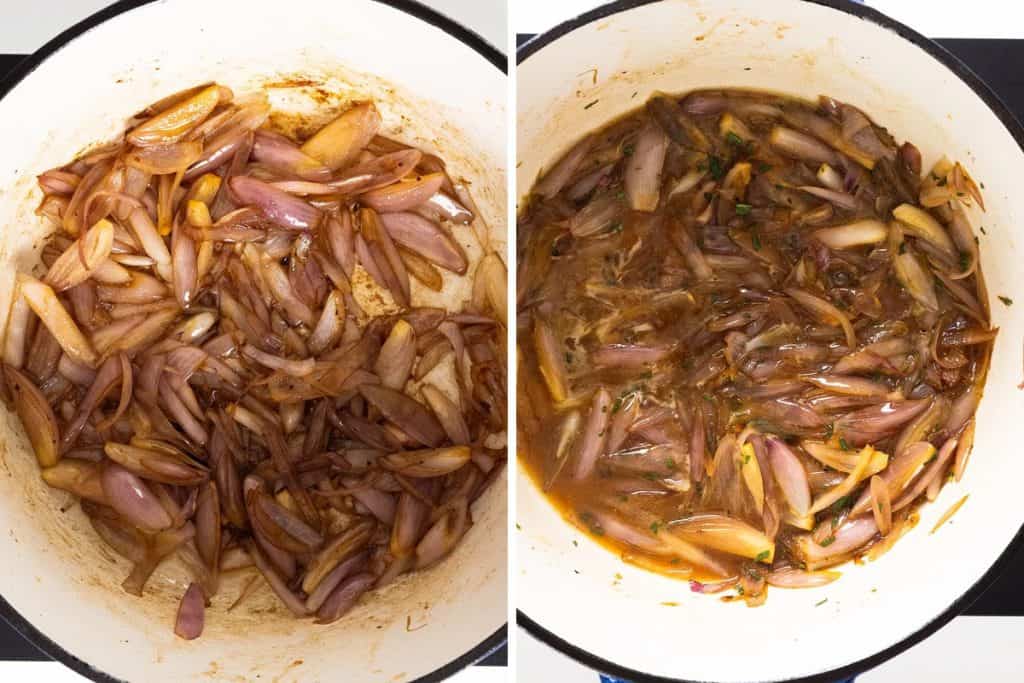
Leave about 2 tablespoons of fat in the pot and reduce the heat to medium. Cook the sliced shallots for 6–8 minutes, stirring occasionally, until softened and lightly golden.
Add the sage and mustard powder. Stir for about 20 seconds, just until fragrant.
3
Add the Braising Liquid
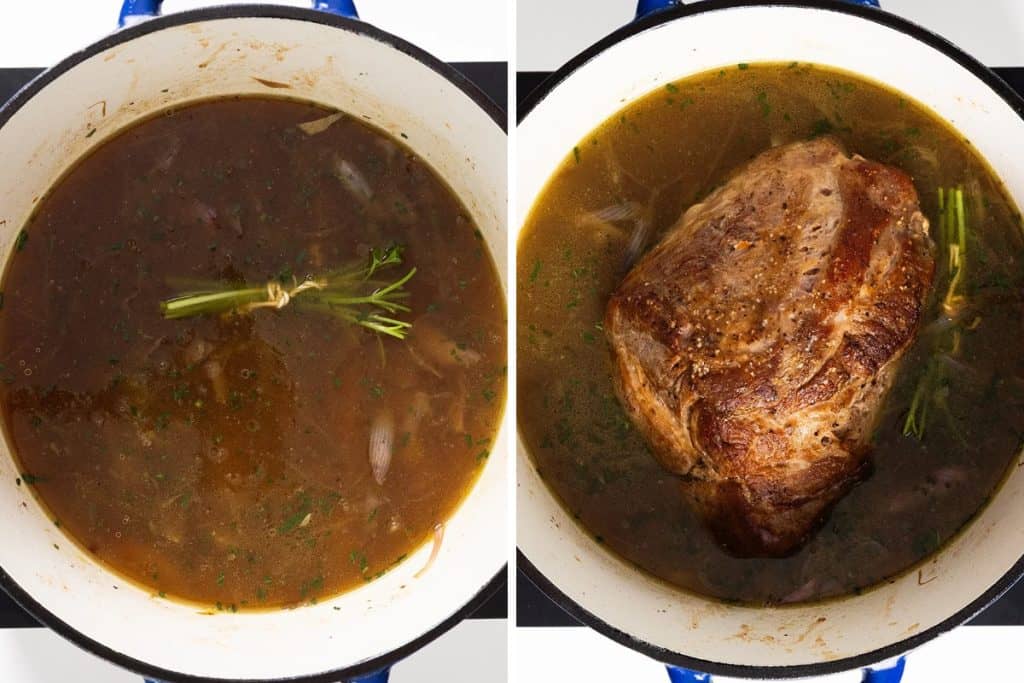
Pour in the wine and scrape up the browned bits from the bottom of the pot. Simmer for 3–5 minutes until reduced by half.
Add the cider and chicken stock, then return the pork and its juices. Tuck the parsley bundle into the liquid. The liquid should come one-third to halfway up the pork; add a little more stock if needed. Bring to a gentle simmer and cover tightly.
4
Braise Until Tender
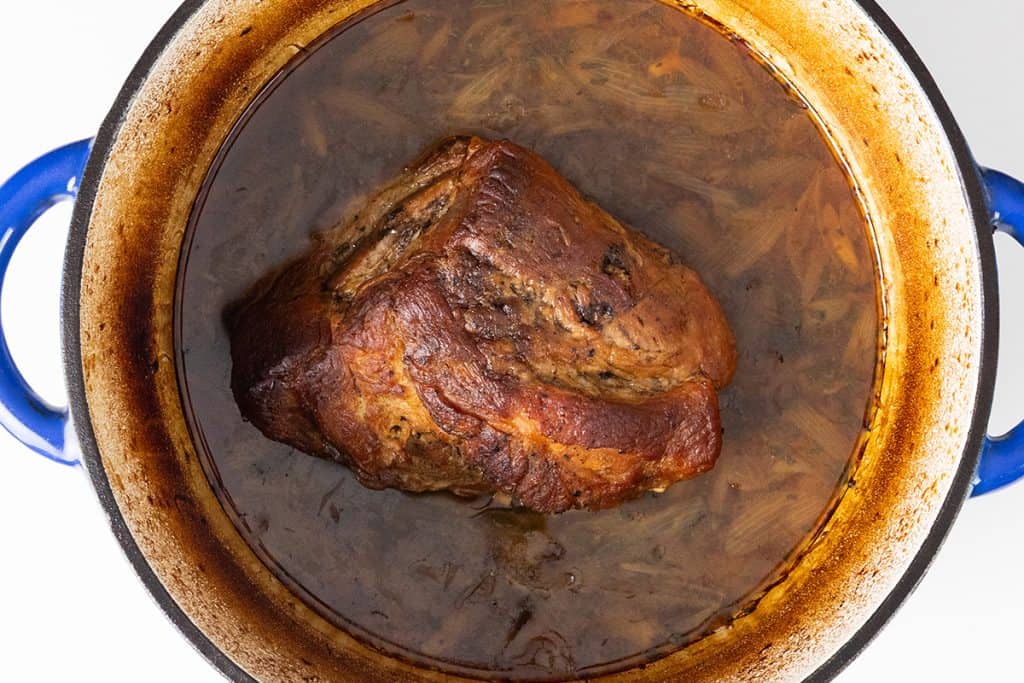
Transfer to the oven and cook for 3–4 hours, carefully turning the pork halfway through. Begin checking after 2½ hours.
Test several thick areas of meat, avoiding large seams of fat. A fork should slide in and twist with very little resistance. If the pork still feels firm, cover and continue cooking in 20–30-minute intervals. Add a little hot stock if the liquid runs low.
5
Rest the Pork and Finish the Sauce
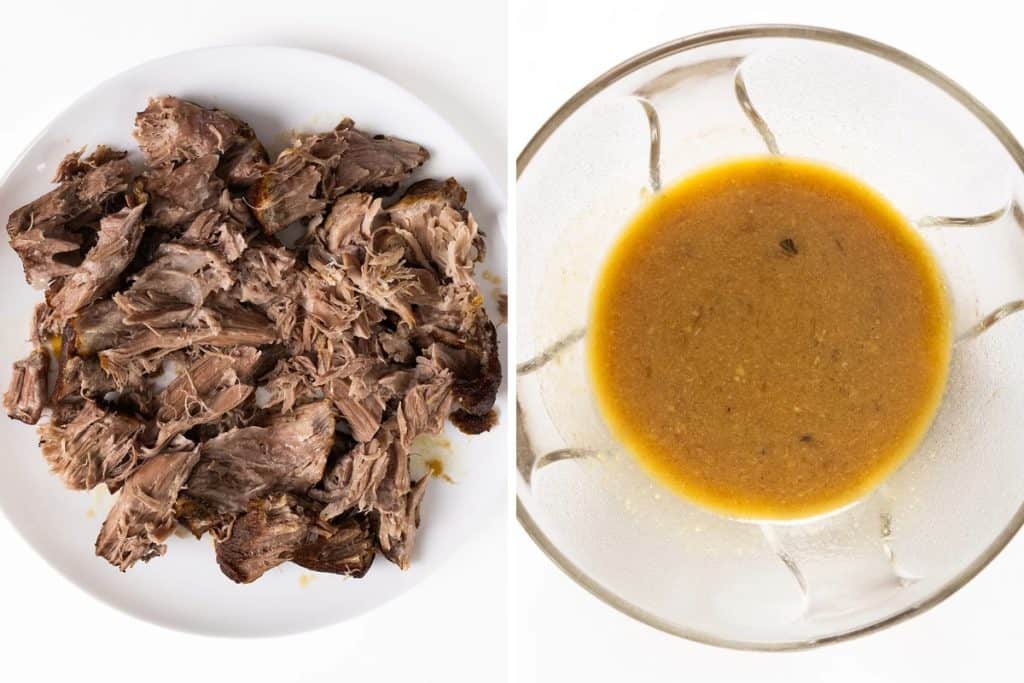
Carefully lift the pork onto a platter, supporting it from underneath. Cover loosely and rest for 10–15 minutes.
Meanwhile, discard the parsley bundle and skim excess fat from the sauce. If it’s watery, simmer uncovered for 5–15 minutes until it lightly coats a spoon. Taste as it reduces so the sweetness and salt don’t become too concentrated.
6
Cook the Apples
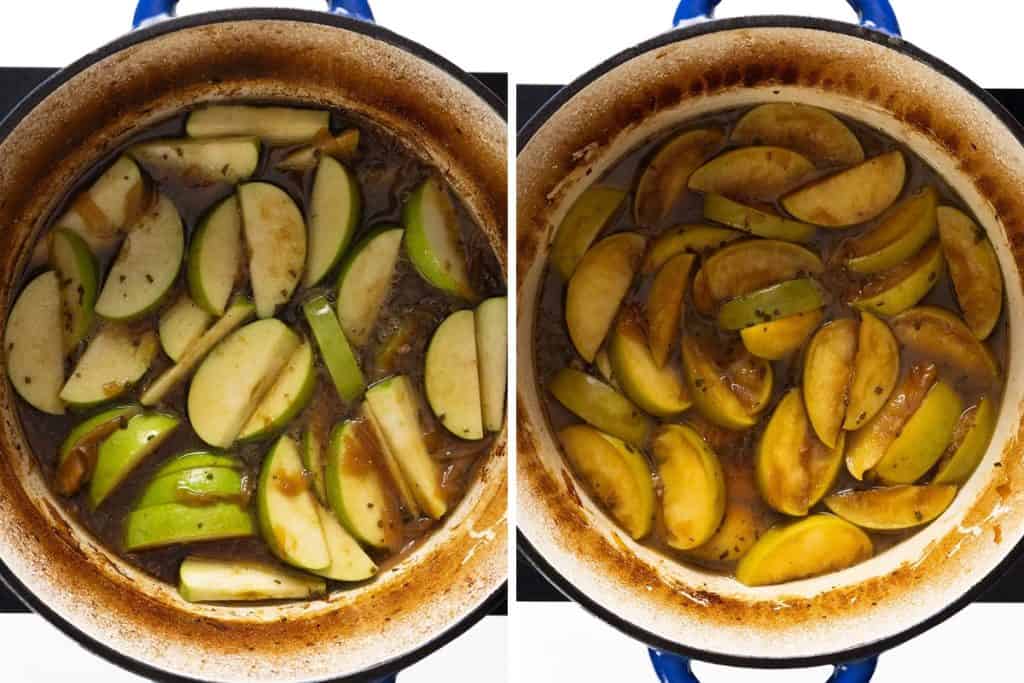
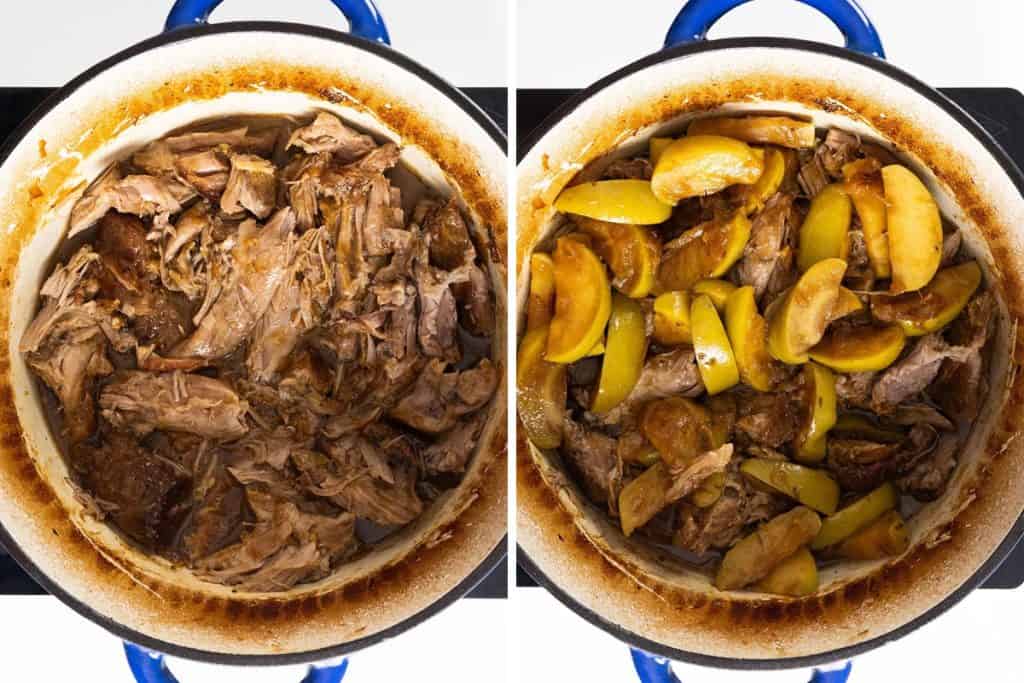
Core the apples and cut into ¾-inch wedges, peeling them if preferred. Add the wedges to the gently simmering sauce and partially cover. Cook for 5–12 minutes, checking after 5 minutes, until just tender but still holding their shape. Lift onto a plate with a slotted spoon.
Remove the twine from the pork and separate the meat into large chunks, discarding any large pockets of fat. Save the resting juices.
7
Bring it All Together
Stir the Dijon into the sauce, then return the pork and resting juices. Warm gently for 3–5 minutes, spooning the sauce over the meat. Taste for seasoning and add more salt as needed, along with pepper or a little more Dijon if desired.
Gently return the apples to warm through, then serve with the shallots and plenty of sauce.
8
Serve and Enjoy
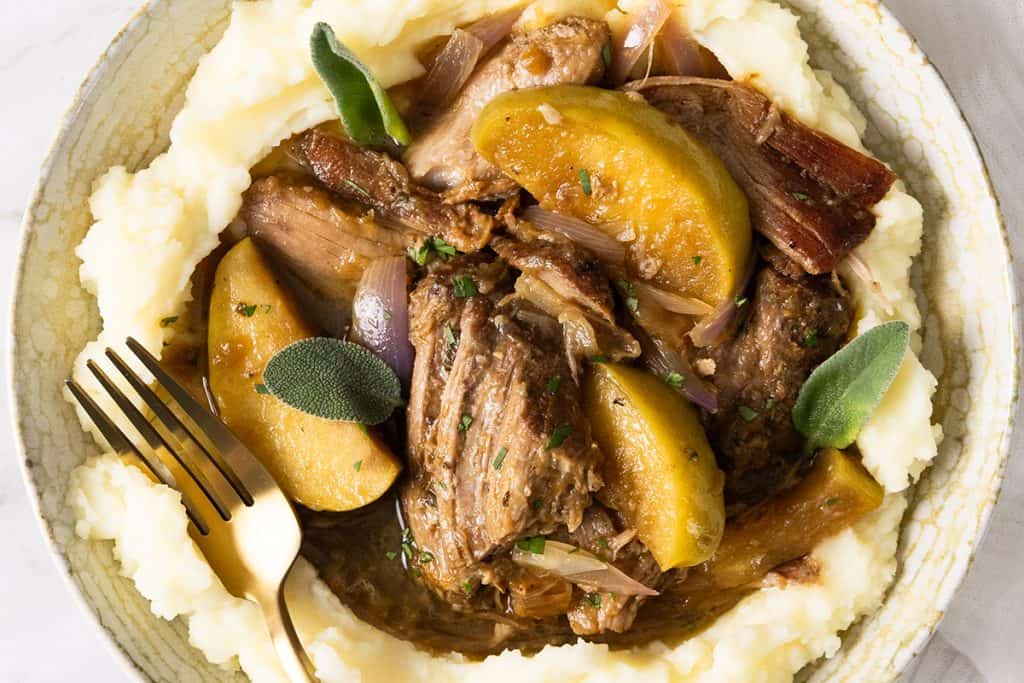
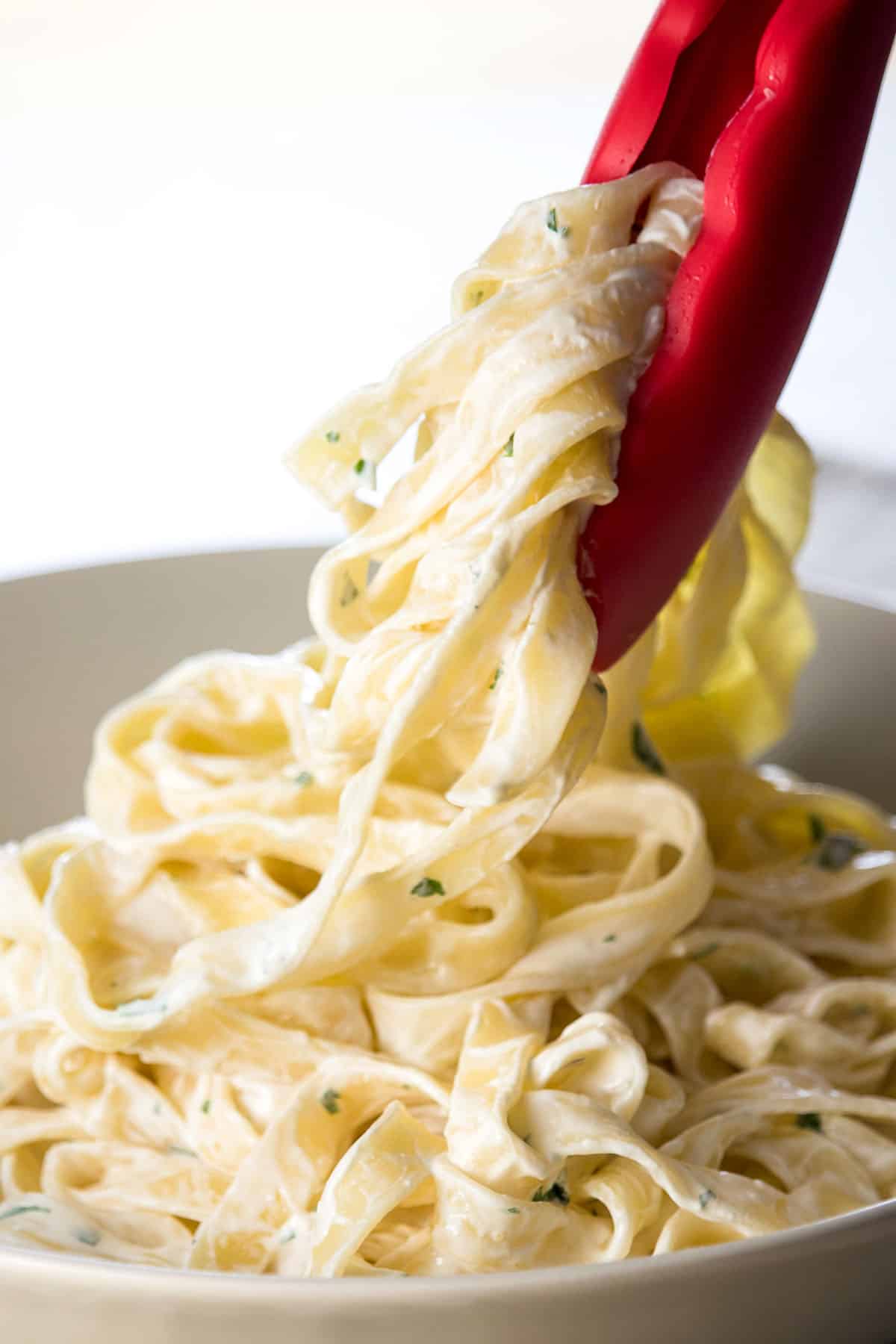
Spoon the pork, apples, and softened shallots over noodles or creamy mashed potatoes, then add plenty of the rich cider sauce. Serve warm and enjoy!
Perfect Pairings

Recipe
Cider Braised Pork Shoulder with Apples
Equipment
- Heavy 6-quart Dutch oven with a tight-fitting lid
- Kitchen twine
Ingredients
- 4 lb boneless pork shoulder (skin removed and excess outer fat trimmed)
- 1½ teaspoons fine table salt (plus more to taste)
- 1 teaspoon ground black pepper (plus more to taste)
- 2 tablespoons neutral oil
- 10 oz shallots (peeled and sliced lengthwise)
- 1 tablespoon finely chopped fresh sage
- 1 teaspoon mustard powder
- ½ cup dry white wine
- 1 cup apple cider (nonalcoholic and unspiced)
- 1½ cups low-sodium chicken stock (plus more as needed)
- 12 flat-leaf parsley stems (tied together with kitchen twine, or chopped)
- 3 medium Granny Smith apples (cored and cut into ¾-inch wedges, peeled if preferred)
- 1 teaspoon Dijon mustard (plus more to taste)
Instructions
- Prepare and brown the pork. Preheat the oven to 325°F. If needed, fold the pork into its natural shape and secure with kitchen twine. Pat dry and season all over with the salt and pepper. Heat the oil in a large Dutch oven over medium-high heat. Brown the pork on all sides, about 15–20 minutes total. Lower the heat if the browned bits begin to burn. Transfer the pork to a plate.
- Cook the shallots. Leave about 2 tablespoons of fat in the pot and reduce the heat to medium. Add the shallots and cook for 6–8 minutes, stirring occasionally, until softened and lightly golden. Stir in the sage and mustard powder and cook for 20 seconds, until fragrant.
- Build the braising liquid. Add the wine, scraping up the browned bits from the bottom of the pot. Simmer for 3–5 minutes until reduced by half. Add the cider and stock, then return the pork and any juices to the pot. Tuck in the parsley bundle. The liquid should reach one-third to halfway up the pork; add more stock if needed. Bring to a gentle simmer and cover tightly.
- Braise the pork. Transfer to the oven and cook for 3–4 hours, carefully turning the pork halfway through. Begin checking after 2½ hours. A fork should slide into the thickest parts and twist with very little resistance. If the meat is still firm, cover and continue cooking in 20–30-minute intervals until tender. Add a little hot stock if the liquid runs low.
- Rest the pork and finish the sauce. Carefully transfer the pork to a platter, cover loosely, and rest for 10–15 minutes. Meanwhile, discard the parsley bundle and skim excess fat from the sauce. If the sauce is watery, simmer uncovered for 5–15 minutes until it lightly coats a spoon. Taste as it reduces to avoid concentrating the sweetness and salt too much.
- Cook the apples. Add the apple wedges to the gently simmering sauce and partially cover. Cook for 5–12 minutes, checking after 5 minutes, until just tender but still holding their shape. Transfer to a plate with a slotted spoon. Remove the twine from the pork and gently separate the meat into large chunks, discarding any large pockets of fat. Reserve the resting juices.
- Finish and serve. Stir the Dijon into the sauce. Return the pork and resting juices to the pot and warm gently for 3–5 minutes, spooning the sauce over the meat. Taste for seasoning and add more salt as needed, along with pepper or a little more Dijon if desired. Gently return the apples to the pot to warm through, then serve with the shallots and plenty of sauce.
Tips
Erren’s Top Tips
- Don’t rush the browning. A deep golden crust adds rich, savory flavor to the finished sauce.
- Use a snug-fitting pot. The braising liquid should come approximately one-third to halfway up the pork, rather than completely covering it.
- Cook to tenderness, not time. Pork shoulder can take longer depending on its shape and thickness. Keep cooking until the meat yields easily to a fork.
- Skim the fat. Pork shoulder releases fat as it cooks. Removing excess fat before finishing the sauce keeps it rich without becoming greasy.
- Don’t over-reduce the sauce. Apple cider contains natural sugars that become more concentrated as the liquid reduces.
- Add the apples late. This keeps them tender and intact instead of letting them break down during the long braise.
Variations
Different Apple Varieties: Try another firm, tart apple such as Pink Lady. Softer apples may need a shorter cooking time. Extra Mustard Flavor: Add a little more Dijon at the end if you prefer a stronger mustard note.Storage & Freezing
Refrigerator: Allow the pork to cool, then store it with its sauce in an airtight container in the refrigerator for up to 3–4 days. Freezer: The pork and sauce can be frozen in an airtight, freezer-safe container for up to 3 months for best quality. For the best texture, consider freezing the pork without the apple wedges, which may soften after thawing. Reheating: Warm the pork gently in a covered saucepan with its sauce over medium-low heat until heated through. Add a splash of stock if necessary to loosen the sauce. Avoid boiling vigorously, which can cause the tender pork to break apart. Save to favoritesYour saved recipes will be right here waiting for you every time you visit, so you can easily find and make the meals you love.
FAQs
What kind of apple cider should I use?
Use plain, nonalcoholic, unspiced apple cider. Hard cider and apple cider vinegar are different ingredients and are not direct replacements here.
Do I need to peel the apples?
No. Leave the skins on or peel the apples if you prefer. Cut them into even ¾-inch wedges and begin checking after 5 minutes so you can lift them out while they still hold their shape.
What if the pork is still firm after the suggested cooking time?
Keep the pot covered and continue braising in 20–30-minute intervals. A fork should slide into the thickest parts and twist with very little resistance. Add a little hot stock if the liquid level runs low.
Can I make this ahead?
Yes. Cook the pork and sauce a day ahead and refrigerate them as directed in Storage & Freezing. Reheat gently, then cook the apple wedges when reheating for the best texture.
What should I serve with cider-braised pork shoulder?
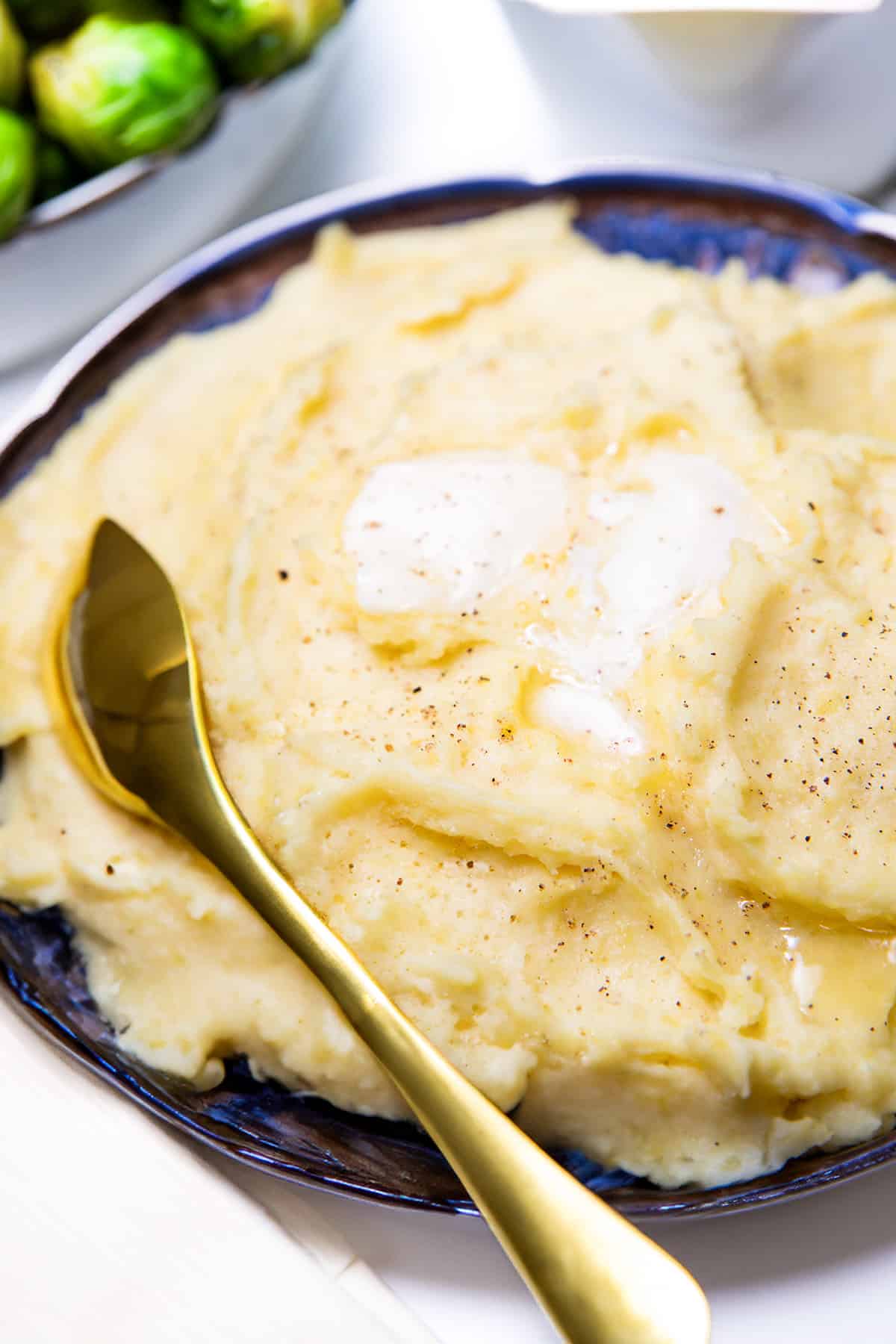
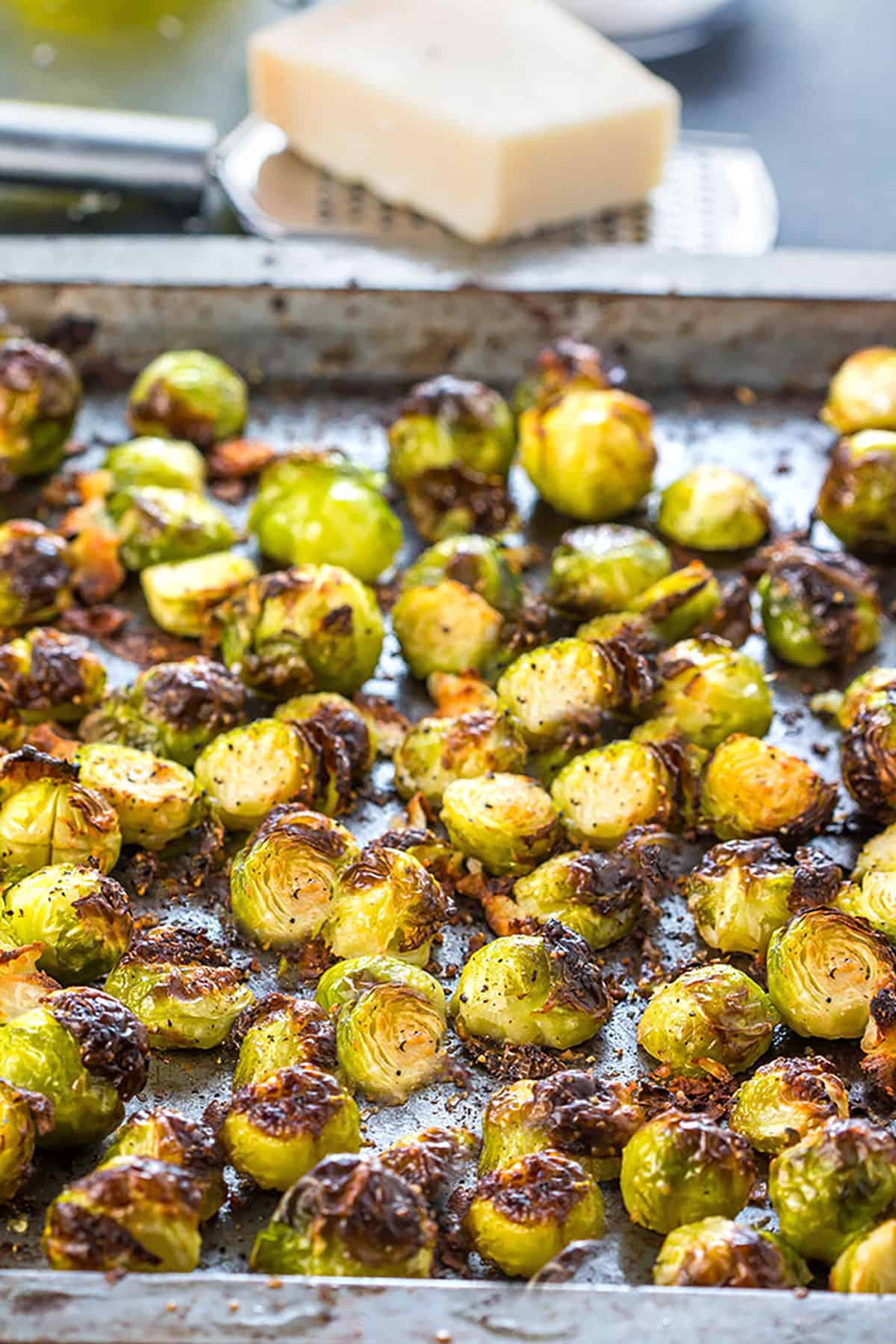
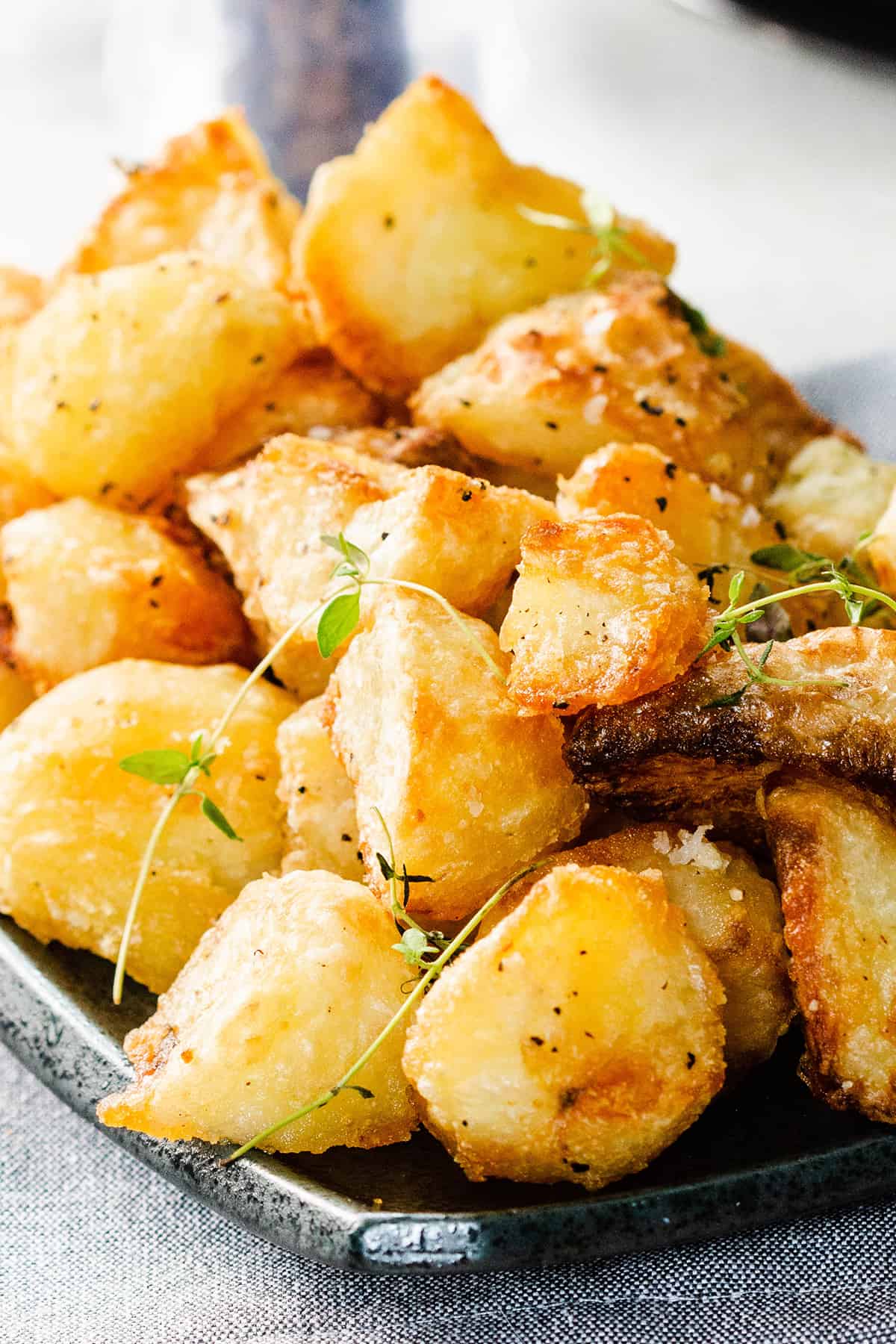
Mashed potatoes are a good choice for catching the sauce. Buttered noodles or crusty bread also work well, with green beans or roasted Brussels sprouts alongside.





Leave a Reply