



This site runs ads and generates income from affiliate links. Read my disclosure policy.
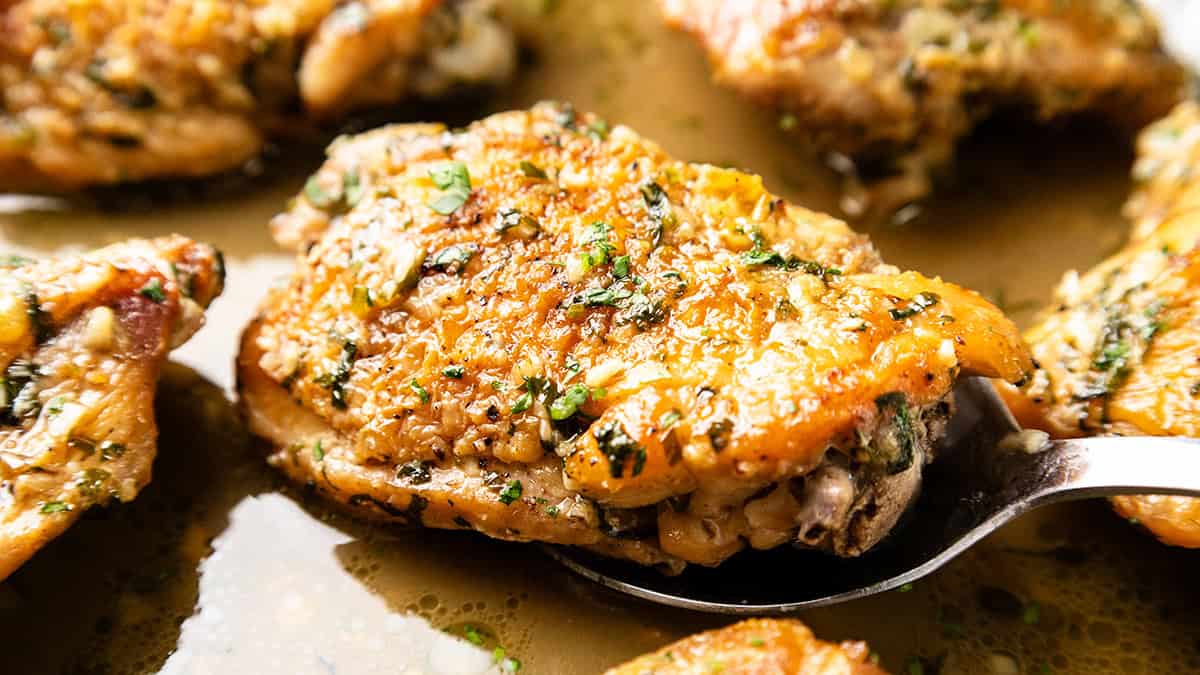
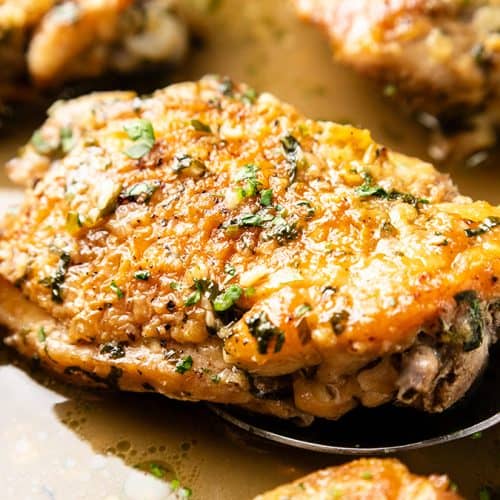
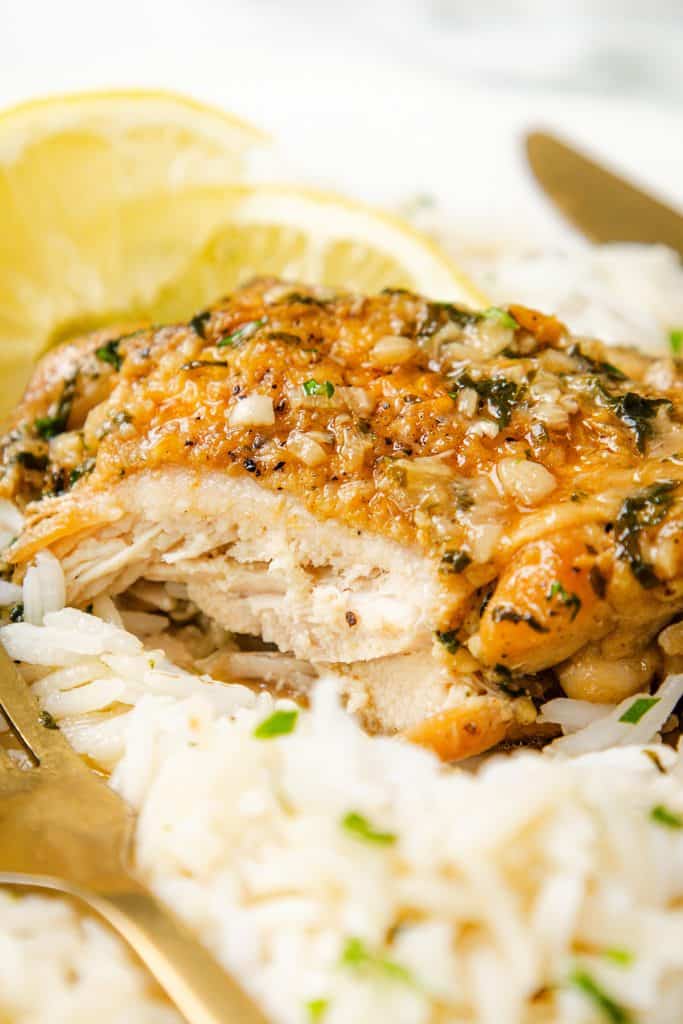
These garlic chicken thighs are baked in a savory white wine sauce with garlic, chicken stock, lemon, and fresh parsley.
Know Before You Scroll

What You’ll Need
Bone-in, skin-on chicken thighs, fresh garlic, dry white wine, chicken stock, parsley, lemon, and olive oil.
Flavor Profile
Savory and garlicky with a rich chicken and white wine sauce and a fresh lemon finish.
Difficulty Level
Easy, with a few simple techniques that make a big difference.
Equipment Needed
A large oven-safe skillet, tongs, wooden spoon, and instant-read thermometer.
Top Tip
Get the oil hot enough that the chicken immediately gives you a strong sizzle, but not so hot that it’s smoking or scorching the skin.
Time-Saving Tips
Chop the garlic and measure the wine before you start. Once the garlic goes into the hot pan, you’ll want the wine ready to add before the garlic gets too dark.
Ingredient Swaps
You can replace the wine with additional chicken stock, but the sauce won’t have quite the same depth or acidity.
Why This Recipe Works
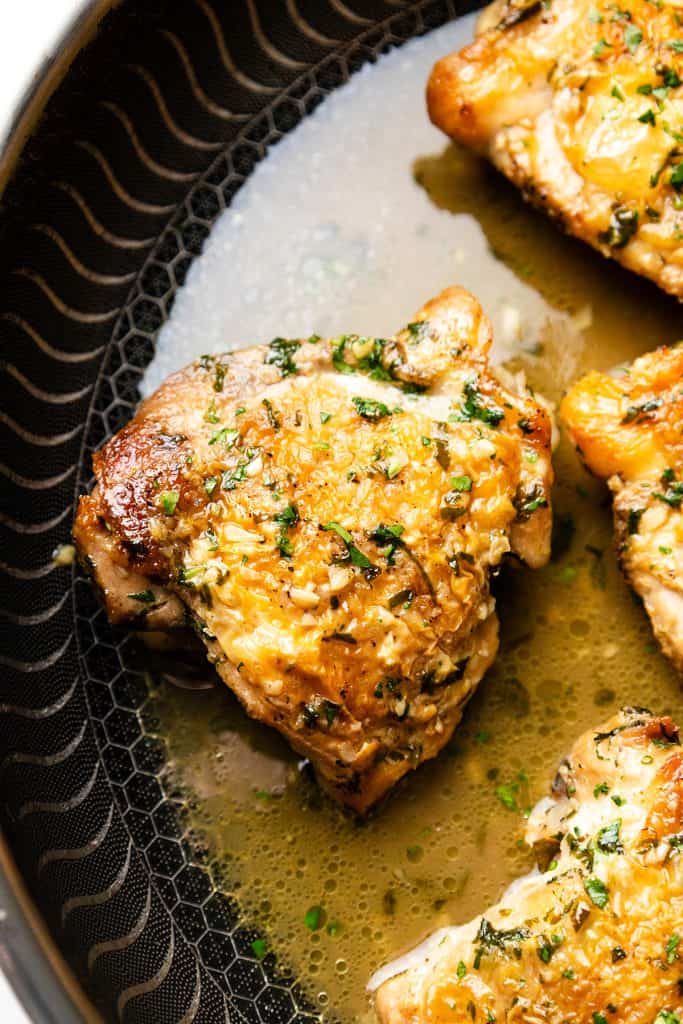
What makes this recipe so good is what happens in the skillet before and during baking. Browning bone-in, skin-on thighs gives you crispy skin and builds the flavorful base for the sauce, while the bones add even more richness as the chicken cooks. The garlic mellows in the oven with white wine, stock, and parsley, creating plenty of savory sauce without covering that beautifully browned skin. Fresh lemon added at the end brings everything into balance without turning bitter.
Ingredient Notes
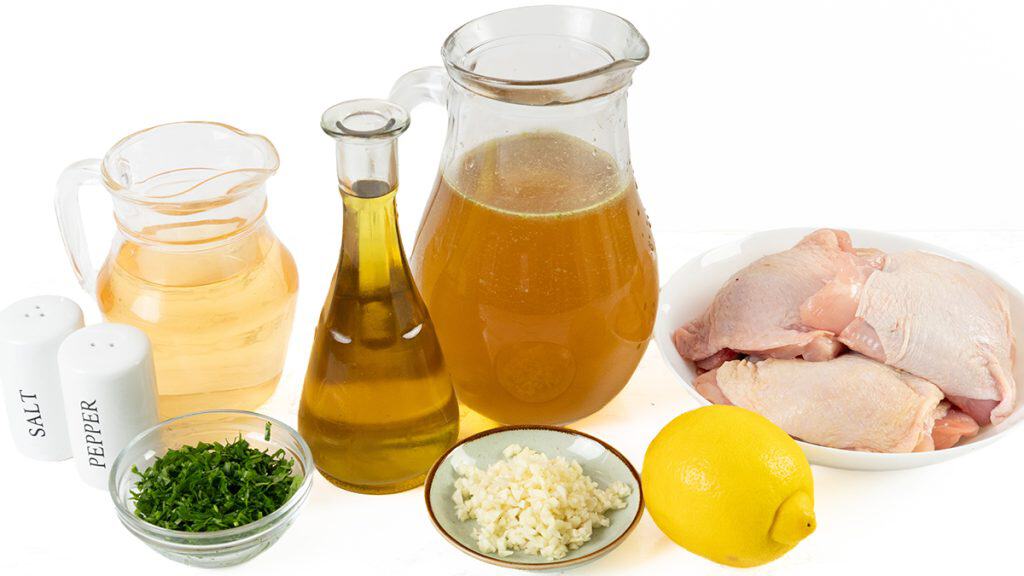
Chicken Thighs
Best Choice
Bone-in, skin-on chicken thighs are my first choice here. The skin browns beautifully while the bone helps keep the meat juicy as it finishes in the sauce.
Substitutions
Boneless thighs can technically be used, but they’ll cook faster and won’t contribute the same richness to the sauce. For this recipe, bone-in really is worth it.
Garlic
Best Choice
Fresh garlic cloves. Six may sound like a lot, but this isn’t a quick pan sauce. The garlic mellows considerably while it bakes with the chicken, wine, and stock.
Substitutions
Fresh garlic is such an important part of this sauce that I wouldn’t replace it with garlic powder.
Dry White Wine
Best Choice
My rule has always been to cook with a wine you’d enjoy drinking. Choose a dry white wine that tastes good to you; it doesn’t need to be expensive.
Substitutions
Replace it with additional chicken stock if you don’t cook with alcohol. Taste the finished sauce and add a little extra lemon if it needs more acidity.
Chicken Stock
Best Choice
Homemade chicken stock is always wonderful if you happen to have some in the freezer, but I know most people don’t.
Substitutions
A good-quality store-bought stock works perfectly well. Low-sodium is helpful if you want more control over the final seasoning.
Lemon
Best Choice
Fresh lemon juice is important here because it’s added right at the end, where you can really taste it.
Substitutions
White wine vinegar can work in a pinch. Start with just a teaspoon, taste, and add more if needed.
You can find the full, printable recipe at the top of this post, but you can read the detailed instructions with photos for each step below.
How To Make Baked Garlic Chicken Thighs
1
Prep The Chicken For A Good Sear
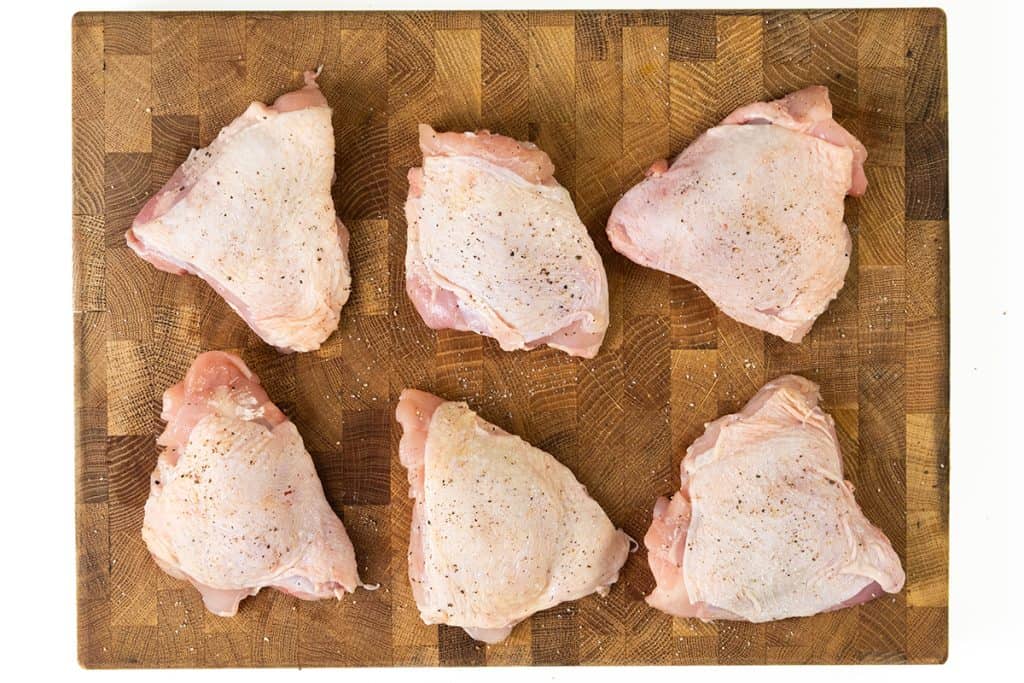
Preheat the oven to 400°F (200°C). Trim any obvious excess fat from the thighs so it doesn’t make the finished sauce greasy, then pat the chicken thoroughly dry, especially the skin.
Season both sides generously with salt and pepper. I’m a firm believer in salting like you mean it—chicken thighs are thick and need proper seasoning.
2
Build That Golden Crust
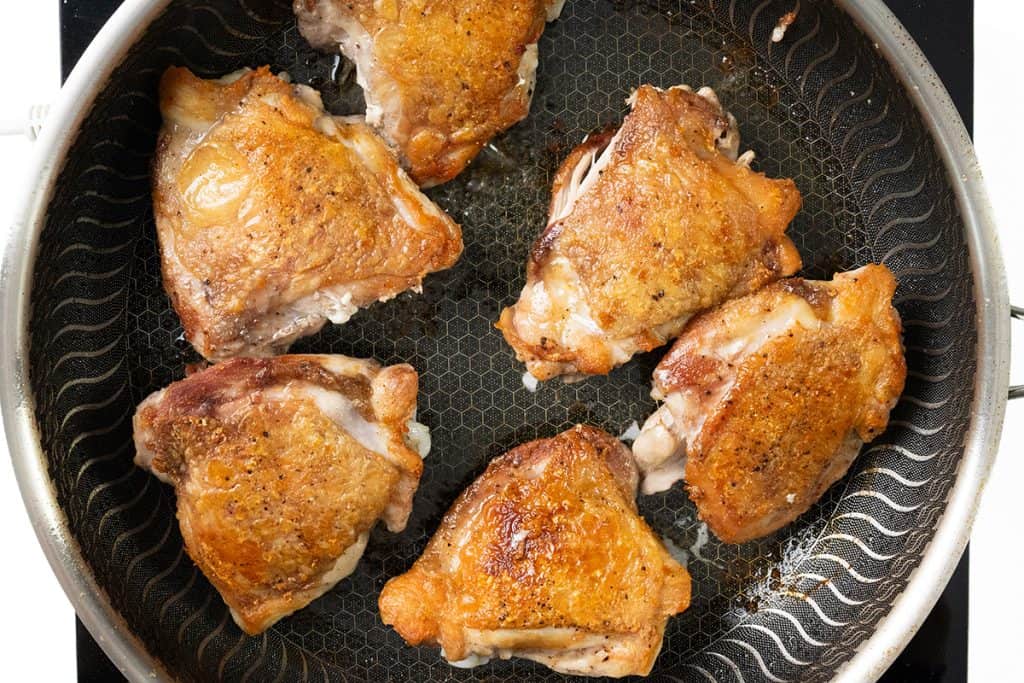
Heat a large oven-safe skillet over medium-high heat first, then add the olive oil and let it get hot and shimmering, but not smoking.
Chef Anne Burrell has compared the sound of food hitting a properly heated pan to the applause when the headliner walks on stage. That’s what you want here—a loud, immediate sizzle when the chicken hits the oil. If you barely hear anything, the pan isn’t hot enough.
Add the thighs skin-side down without crowding them and leave them alone for a good 3 minutes before checking. Continue cooking until the skin is deeply golden brown, then flip and briefly brown the other side before transferring to a plate.
The immediate sizzle tells you the pan is ready; the deep golden color tells you when the chicken is ready to turn.
3
Build The Garlic Base
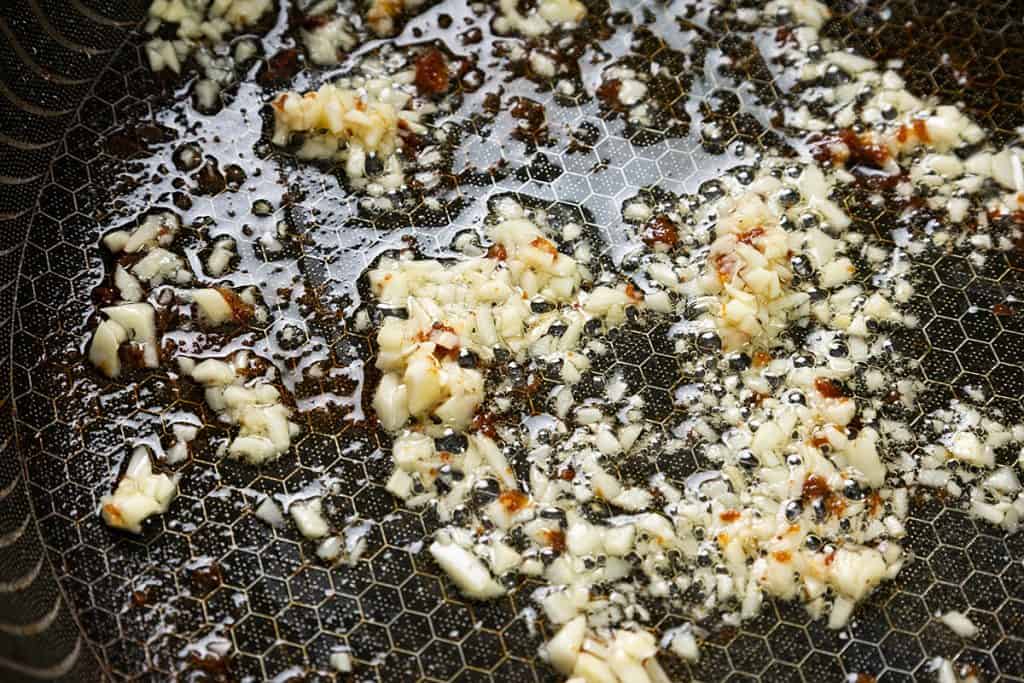
Drain off the excess chicken fat, leaving about 1 tablespoon in the skillet. Don’t clean the pan—those browned bits are going straight into the sauce.
Add the garlic and cook just until fragrant and lightly golden, not brown. Garlic turns bitter quickly once it starts coloring, so have the wine measured and ready to go.
4
Deglaze With The Wine
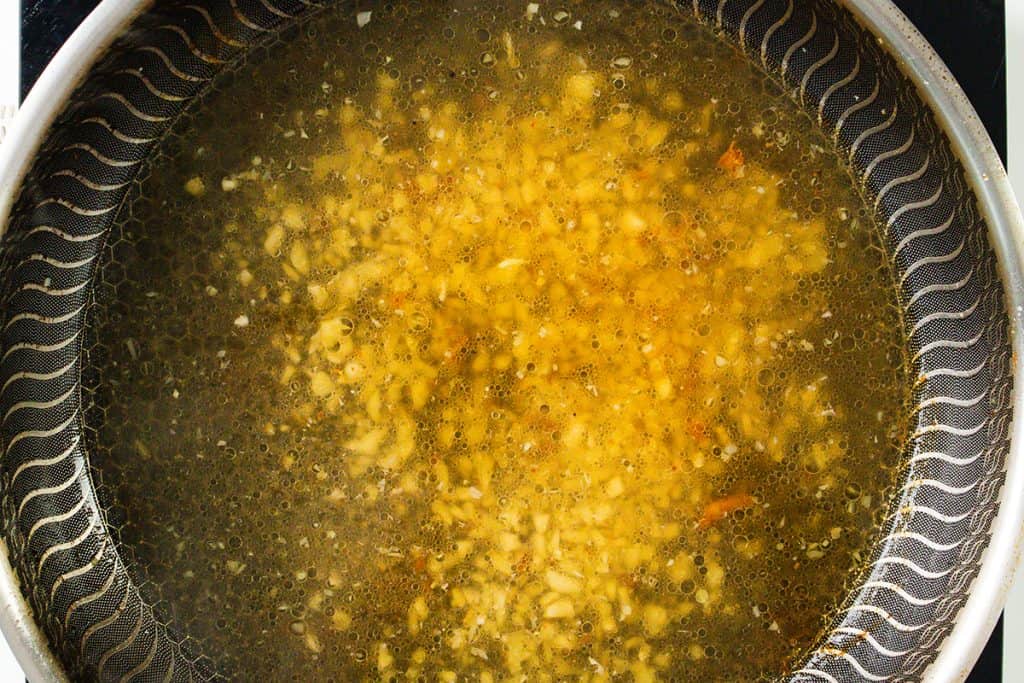
Pour in the white wine and bring it to a boil, scraping up all those flavorful browned bits from the bottom of the skillet.
Let it bubble for about 3 minutes. You’ll know it’s ready when the sharp alcoholic aroma has cooked away and the wine smells softer and more mellow.
5
Add The Chicken Without Drowning The Skin
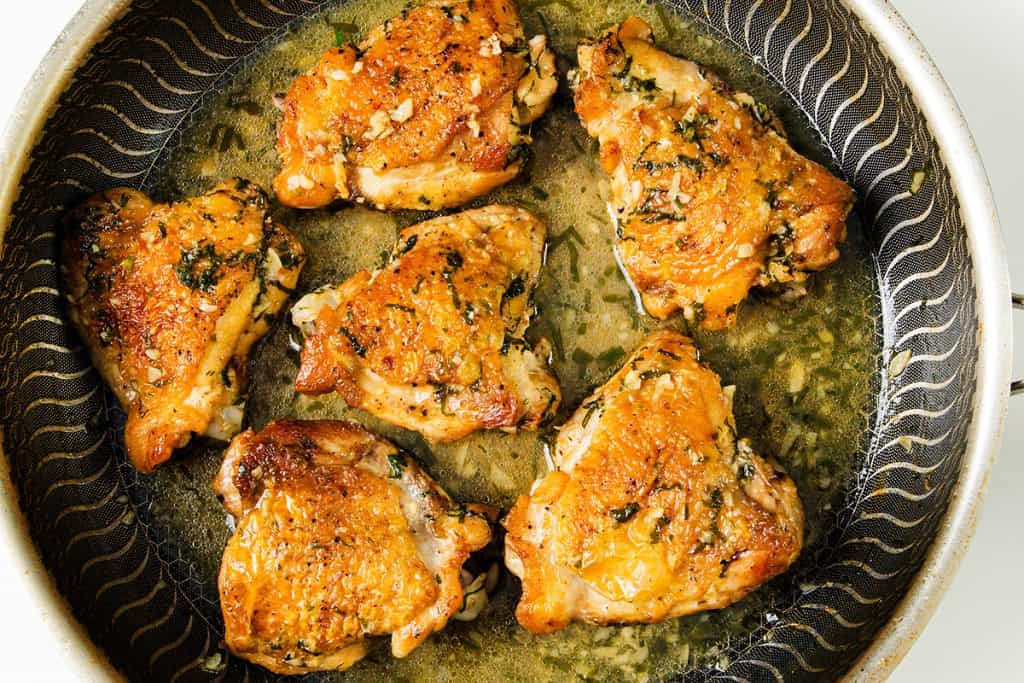
Add the chicken stock and parsley, then return the thighs skin-side up and bring the sauce back to a simmer.
Pan size matters here. You want plenty of sauce around the chicken without letting it reach the browned skin. Keeping the tops exposed helps preserve that crisp texture while the chicken and garlic flavor the sauce.
Transfer the uncovered skillet to the oven and bake for about 35 minutes, checking the thickest part of a thigh with an instant-read thermometer rather than cutting into the chicken.
6
Finish With Fresh Lemon
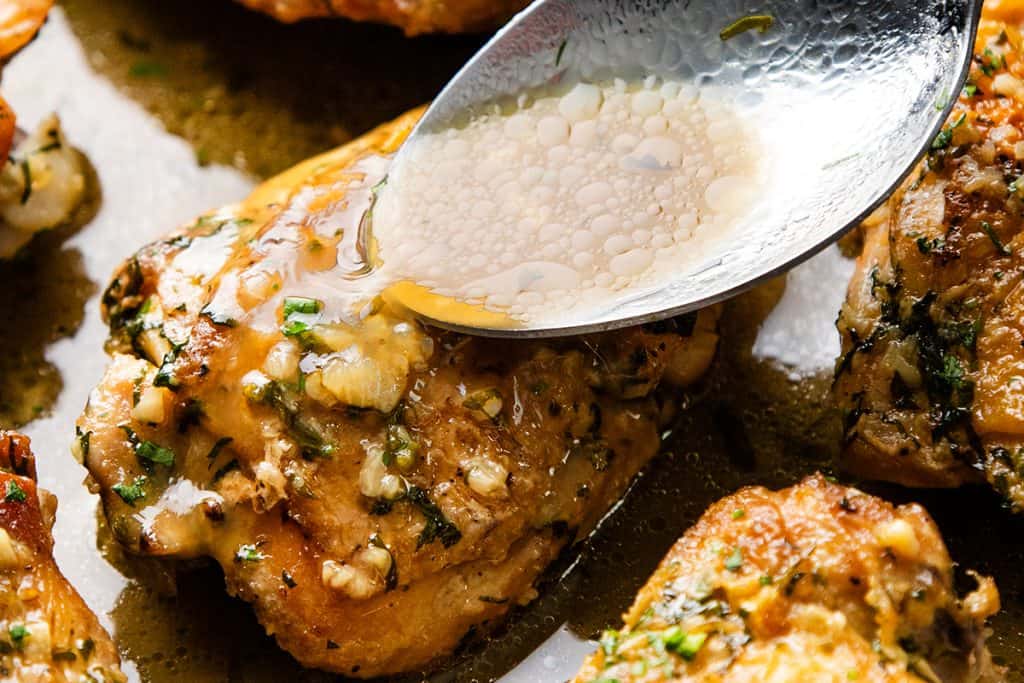
Transfer the chicken to a plate and stir the lemon juice into the sauce. Adding it after cooking keeps the flavor fresh and avoids the bitterness lemon can develop with prolonged heat.
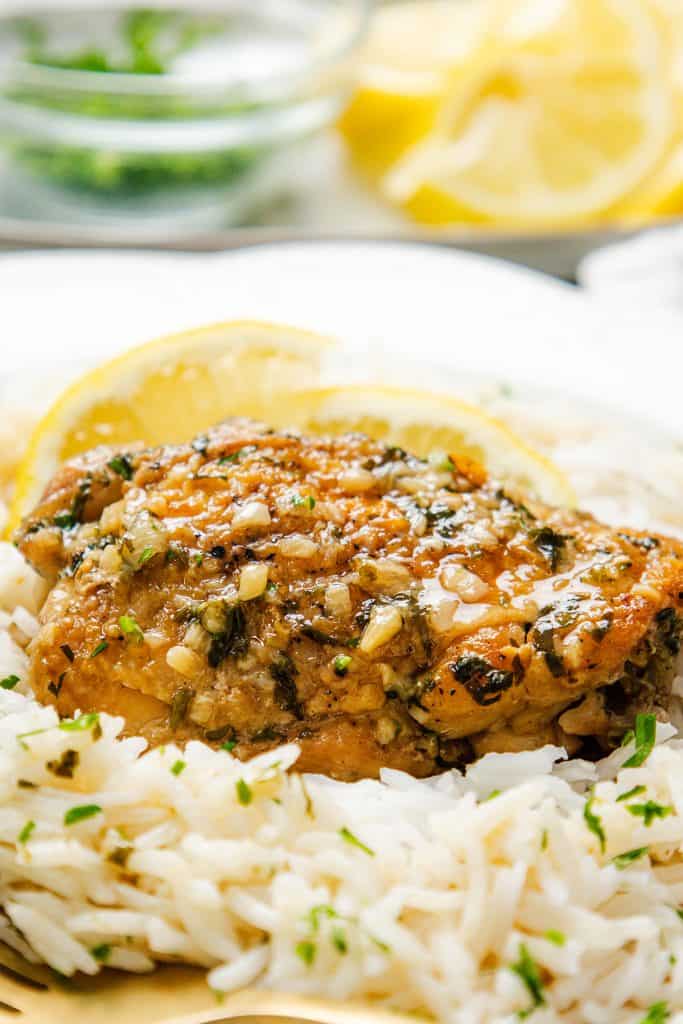
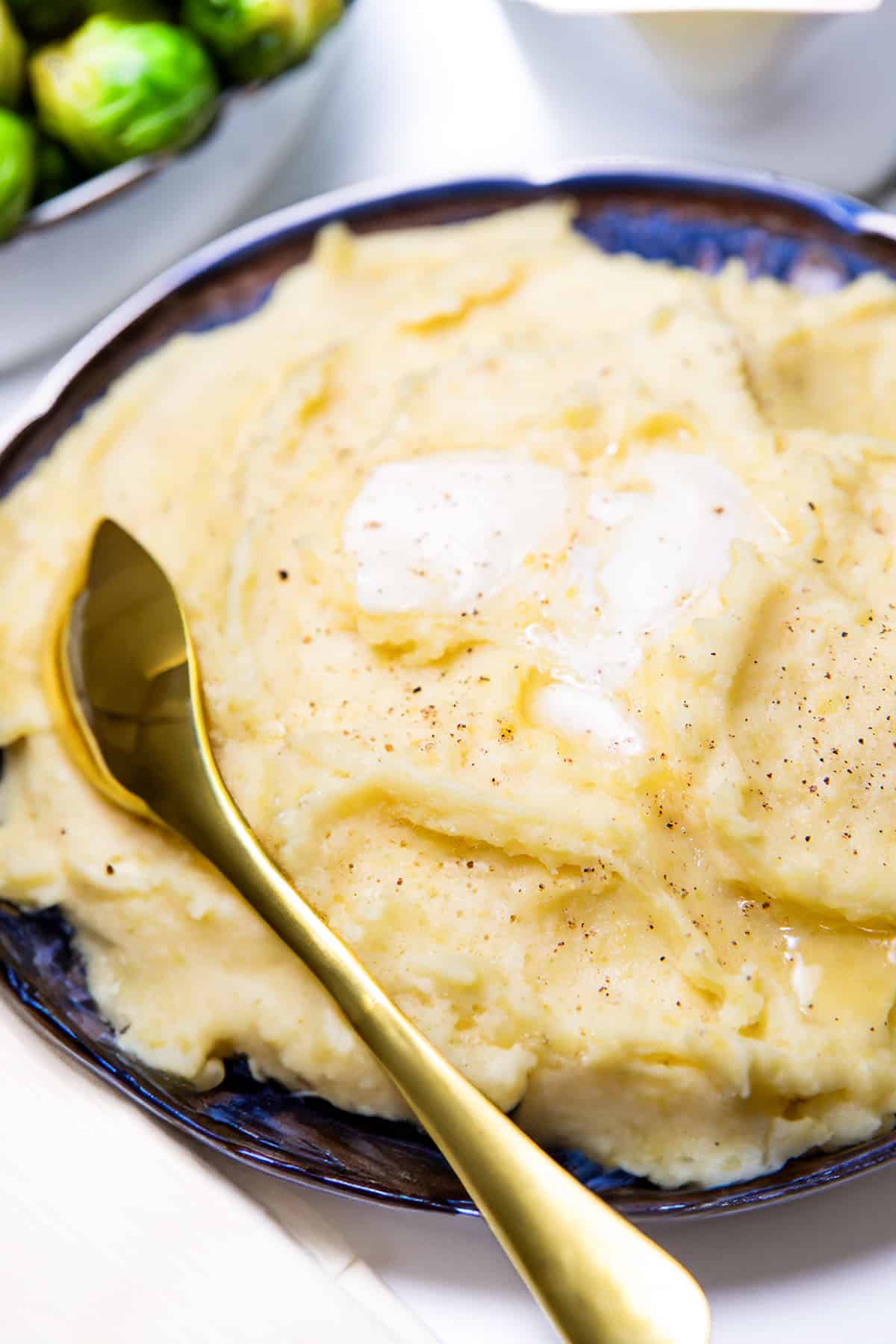
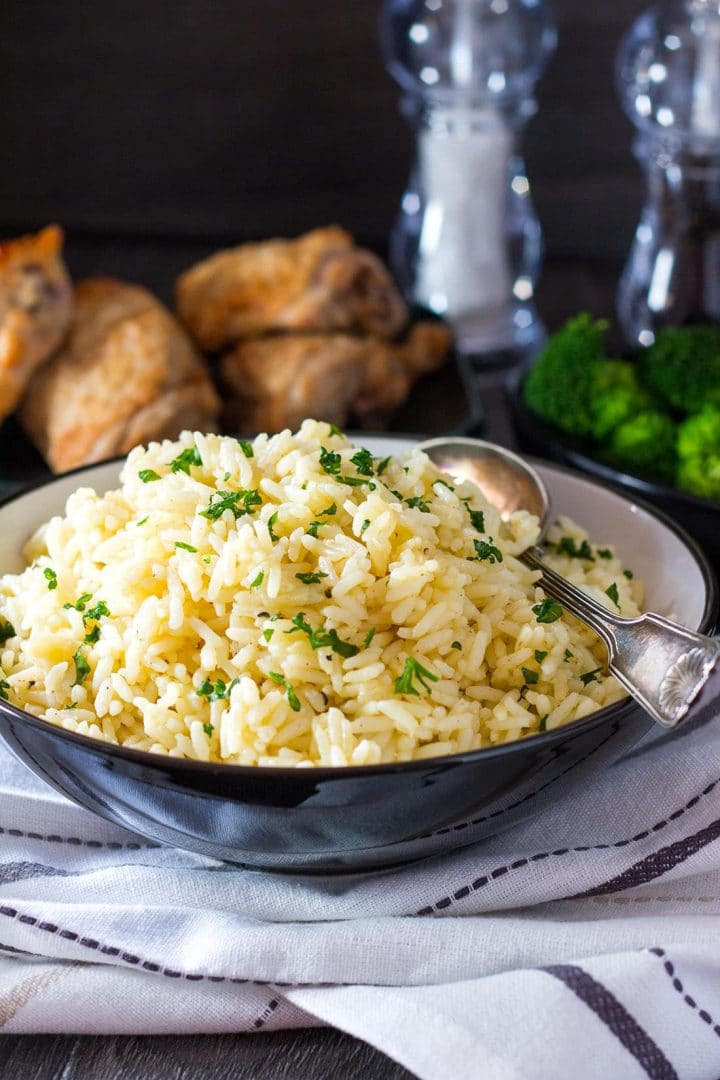
Taste before adding more salt or pepper. If you prefer a thicker sauce, simmer it for a few minutes with the chicken removed, although I like this one loose enough to spoon generously over rice or potatoes.
When serving, wait until the last minute to spoon the sauce over the chicken so that beautifully browned skin stays crisp.
Perfect Pairings
Rate This Recipe
Recipe
Baked Garlic Chicken Thighs
Ingredients
- 1 tbsp olive oil
- 6 chicken thighs (bone-in with skin)
- 6 garlic cloves (chopped)
- 1½ cup dry white wine
- 1½ cup chicken stock
- fresh parsley (a good handful, chopped)
- Salt and Pepper
- ½ lemon (juiced)
Instructions
- Preheat the oven to 400°F (200°C). Trim any excess fat from the chicken thighs, pat them thoroughly dry, and season both sides generously with salt and pepper.
- Heat the olive oil in a large oven-safe skillet over medium-high heat until shimmering but not smoking. Add the chicken skin-side down; it should sizzle immediately. Cook undisturbed for at least 3 minutes, then continue cooking until the skin is deeply golden. Turn and lightly brown the second side.
- Transfer the chicken to a plate. Carefully drain the excess rendered fat from the skillet, leaving about 1 tablespoon behind.
- Add the garlic and cook until fragrant and lightly golden, about 30 seconds to 1 minute.
- Immediately pour in the wine. Increase the heat and bring to a boil, scraping up the browned bits from the bottom of the skillet. Cook for about 3 minutes, until the sharp alcoholic aroma has mellowed.
- Add the chicken stock and parsley. Return the chicken to the skillet skin-side up, keeping the browned skin above the liquid. Bring the sauce back to a simmer.
- Transfer the uncovered skillet to the oven and bake for about 35 minutes, or until the chicken reaches at least 165°F (74°C) in the thickest part without touching the bone.
- Transfer the chicken to a plate and stir the lemon juice into the sauce. Taste and adjust the salt and pepper as needed. If you prefer a thicker sauce, simmer it briefly on the stovetop.
- Return the chicken to the skillet or serve immediately, spooning the sauce over the crispy skin only just before serving.
Tips
Erren’s Top Tips
Don’t crowd the skillet. The chicken needs room to sear rather than steam, and a wide enough pan also keeps the sauce below the crispy skin. Trim excess fat first. Then drain most of the rendered fat after searing, leaving about a tablespoon. You’ll get plenty of chicken flavor without a greasy sauce. Have the wine ready. Once the garlic becomes fragrant and lightly golden, you need to stop its cooking quickly before it browns and turns bitter. Don’t move the chicken too soon. Give it a good 3 minutes before checking. Deep golden skin is worth waiting for. Bring the sauce back to a simmer. Do this on the stovetop after returning the chicken and before transferring the skillet to the oven. Salt like you mean it, but taste before serving. Season the chicken confidently at the beginning, then let your taste buds decide what the finished sauce needs. Don’t drown the crispy skin at the finish line. Spoon the sauce over just before serving so you get the best of both worlds.Storage & Reheating
Store leftover chicken and sauce in an airtight container in the refrigerator for up to 3 to 4 days. The skin will naturally soften during storage. For the best texture, reheat the chicken in the oven rather than simmering it in the sauce. Warm the sauce separately and spoon it over the chicken just before serving. You can also freeze the chicken and sauce for up to 3 months. Thaw overnight in the refrigerator before reheating. The flavor will still be good, although freezing won’t preserve the crispness of the skin. Save to favoritesYour saved recipes will be right here waiting for you every time you visit, so you can easily find and make the meals you love.
FAQs
Can I make this recipe with fewer chicken thighs?
Yes. You can make four thighs and keep the full amount of sauce if you want plenty for serving. Just pay attention to the size of your skillet—the sauce should surround the chicken without rising high enough to cover the browned skin. If you’re using a smaller pan, you may need to reduce the amount of liquid.
What temperature should chicken thighs be cooked to?
Chicken is safe to eat once the thickest part reaches 165°F (74°C). Insert an instant-read thermometer into the thickest part of the thigh without touching the bone.
For thighs, I also think it’s worth explaining that 165°F is the safety minimum, not necessarily the moment dark meat has its best texture. We should research and decide whether we want to give a preferred higher range rather than making an unsupported recommendation.
Can I make Baked Garlic Chicken Thighs ahead of time?
You can, but this recipe is at its best straight from the oven. The sauce can be made/reheated easily, but the chicken skin will soften once it’s refrigerated in the sauce. If making it ahead, I’d store the chicken and sauce separately and reheat the thighs uncovered in the oven, then add the warmed sauce just before serving.













Leave a Reply