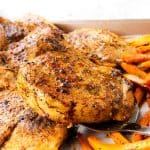
Mediterranean Sheet Pan Pork Chops
Juicy, Mediterranean-seasoned pork chops roast alongside golden potatoes and tender carrots for an easy one-pan dinner with minimal cleanup.
Servings 4
Calories 586
Ingredients
For the Pork Chops
- 4 bone-in pork chops about 1 inch thick
- 2 tablespoons olive oil
- 1 teaspoon dried oregano
- 1 teaspoon smoked paprika
- ½ teaspoon ground cumin
- ½ teaspoon garlic powder
- ½ teaspoon salt
- ¼ teaspoon black pepper
- Zest of 1 lemon
For the Potatoes
- 3 cups baby gold potatoes halved
- 1 tablespoon olive oil
- ½ teaspoon garlic powder
- ½ teaspoon dried thyme
- Salt and pepper to taste
- 2 tablespoons grated Parmesan cheese optional
For the Carrots
- 3 cups carrots peeled and cut into sticks
- 2 tablespoons olive oil
- Salt and pepper to taste
Instructions
- Preheat the oven: Preheat the oven to 425°F (220°C). Line a large rimmed baking sheet with parchment paper or lightly grease it.
- Start the potatoes: Toss the potatoes with 1 tablespoon olive oil, garlic powder, thyme, salt, and pepper. Arrange them cut-side down over one-third of the prepared pan. Roast for 10 minutes.
- Season the pork: While the potatoes roast, pat the pork chops dry with paper towels. Mix the olive oil, oregano, smoked paprika, cumin, garlic powder, salt, pepper, and lemon zest. Rub the seasoning mixture evenly over both sides of the pork chops.
- Prepare the carrots: Toss the carrot sticks with 2 tablespoons olive oil and season with salt and pepper.
- Assemble the pan: Remove the sheet pan from the oven. Push the potatoes to one side, place the pork chops in the center, and arrange the carrots over the remaining third of the pan.
- Roast: Return the pan to the oven and roast until the pork reaches an internal temperature of 145°F (63°C) at its thickest point and the vegetables are tender, about 15 to 25 minutes depending on the thickness of the chops. Start checking the pork after 15 minutes.
- Remove the pork as needed: If the pork reaches 145°F before the vegetables are tender, transfer the chops to a plate and loosely cover while the vegetables finish roasting.
- Rest and finish: Let the pork chops rest for 5 minutes before serving. If you'd like more color on the vegetables, broil them for 2 to 3 minutes while the pork rests, watching carefully so they don't burn.
- Serve: Sprinkle the potatoes with Parmesan, if using, and serve with the pork chops and roasted carrots.
Notes
Erren’s Top Tips
Use a large sheet pan. Crowding traps steam, which means softer vegetables instead of beautifully roasted ones. Give everything as much room as possible. Cut the vegetables evenly. Keep the potato halves and carrot sticks relatively uniform so you don't end up with some pieces tender while others are still firm. Put the potatoes cut-side down. That flat surface has direct contact with the hot pan, giving you much better browning. Pat the pork dry first. Removing excess surface moisture helps the seasoning stick and encourages better browning. Don't cook pork by time alone. Thickness varies enormously from one pork chop to another. An instant-read thermometer is your best friend here. Check the temperature away from the bone. Insert the thermometer into the thickest part of the meat without touching the bone for the most accurate reading. Let the pork rest. Five minutes gives the juices time to redistribute before you cut into it.Variations & Add-Ins
Add red onion: Cut a red onion into thick wedges and roast it alongside the carrots for extra sweetness. Add zucchini: Thick zucchini pieces work well, but add them during the last 15 minutes so they don't become too soft. Make it a little spicy: Add a pinch of crushed red pepper or cayenne to the pork seasoning. Add fresh herbs: Finish the whole pan with chopped parsley for freshness and color. Add feta: A little crumbled feta scattered over the vegetables after roasting works beautifully with the oregano, cumin, and lemon.Storage & Reheating
Store leftover pork chops and vegetables in an airtight container in the refrigerator for up to 3 days. For the best results, reheat the pork gently so it doesn't dry out. Cover and warm in a 325°F (165°C) oven until heated through. The vegetables can be reheated alongside the pork or crisped separately at a higher temperature. You can also reheat individual portions in the microwave, but use short intervals to avoid overcooking the pork. I don't recommend freezing the roasted potatoes because their texture can become grainy after thawing.Nutrition
Calories: 586 | Carbohydrates: 31g | Protein: 39g | Fat: 34g | Saturated Fat: 8g | Polyunsaturated Fat: 4g | Monounsaturated Fat: 19g | Trans Fat: 0.2g | Cholesterol: 119mg | Sodium: 502mg | Potassium: 1401mg | Fiber: 6g | Sugar: 6g | Vitamin A: 16335IU | Vitamin C: 28mg | Calcium: 115mg | Iron: 3mg