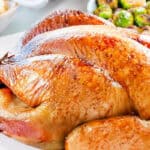
Brined Roasted Turkey
This Brined Roasted Turkey is flavored with a savory herb brine and rubbed with butter before roasting. It’s perfect for holiday gatherings, with golden skin and tender, flavorful meat.
Servings 10
Calories 491
Equipment
- Large pot
- Large food-safe brining container or brining bag
- Large roasting pan and rack
- Food thermometer
- Carving board
Ingredients
For the Brine
- 1 cup kosher salt
- ½ cup brown sugar
- 4 bay leaves
- 2 garlic cloves
- 1 tablespoon black peppercorns
- 1 tablespoon dried thyme or a few sprigs of fresh thyme
- 1 gallon cold water divided
For the Turkey
- 1 whole turkey 12–14 pounds, thawed if frozen
- ½ cup softened butter for rubbing
- Salt and pepper to season
Instructions
To Brine
- In a large pot, combine the kosher salt, brown sugar, bay leaves, garlic, peppercorns, and thyme.
- Add 2 cups of the water and bring to a boil over medium heat. Stir until the salt and sugar dissolve completely.
- Remove from the heat and let cool. Add the remaining cold water, then refrigerate until the brine is completely cold.
- Place the thawed turkey in a large food-safe container or brining bag. Pour the cold brine over the turkey, ensuring it’s submerged. If needed, place a plate on top to keep it under the liquid.
- Refrigerate for 12–24 hours.
- Remove the turkey from the brine. If rinsing off excess brine, use a gentle stream of cold water to minimize splashing. Thoroughly clean and sanitize the sink and surrounding surfaces afterward. Pat the turkey dry with paper towels and place it breast-side up on a rack in a large roasting pan.
Roast the Turkey
- Preheat the oven to 325°F.
- Rub the softened butter over the turkey and under the breast skin if possible. Season with black pepper and a light sprinkle of salt; the brine adds most of the salt needed.
- If desired, place aromatics such as thyme, halved onions, garlic, or lemon loosely inside the cavity.
- Roast uncovered for approximately 3 to 3¾ hours, beginning to check the temperature before the lower end of the range. If the skin browns too quickly, tent it loosely with foil.
- The turkey is ready when a food thermometer reads at least 165°F in the thickest part of the breast, the innermost thigh, and the innermost wing. Avoid touching bone with the thermometer.
- Transfer the turkey to a carving board and tent loosely with foil. Rest for 20–30 minutes, then carve and serve.
Notes
Erren’s Top Tips
- Plan for thawing. A frozen 12–14 pound turkey generally needs 3–4 days to thaw in the refrigerator. Place it on a tray to catch any drips.
- Keep the brine cold. Chill it completely before adding the turkey, and keep the turkey refrigerated at 40°F or below throughout brining.
- Check the label. A pre-brined or self-basting turkey may already contain salt.
- Pat the skin dry. Drying the turkey thoroughly after brining helps the skin brown in the oven.
- Roast uncovered. If the skin browns too quickly, loosely tent it with foil while the turkey finishes cooking.
- Use a thermometer. Check the breast, thigh, and wing rather than relying on time or appearance alone.
- Rest before carving. Give the turkey 20–30 minutes to rest before slicing.
- For drier skin, refrigerate the turkey uncovered on a rack after brining, then proceed with the recipe.
- Cook stuffing separately; the roasting guidance is for an unstuffed turkey.
Variations & Add-Ins
Citrus Brine: Add orange or lemon slices to the brine for a subtle citrusy flavor. Herb Butter: Mix chopped rosemary, sage, or thyme into the softened butter before rubbing it over the turkey. Aromatics: Place sprigs of thyme, halved onions, garlic, lemon, or apples loosely inside the cavity. Cook stuffing separately.Storage & Freezing
Refrigerate: Remove the meat from the bones and place it in shallow containers. Refrigerate within 2 hours of cooking and use within 3–4 days. Freeze: Place cooled turkey in freezer-safe containers or bags. Freeze for up to 4 months for best quality. Reheat: Add a little stock or gravy to help keep the turkey moist. Cover and reheat until it reaches 165°F.Nutrition
Calories: 491 | Carbohydrates: 12g | Protein: 56g | Fat: 24g | Saturated Fat: 10g | Polyunsaturated Fat: 4g | Monounsaturated Fat: 7g | Trans Fat: 1g | Cholesterol: 210mg | Potassium: 616mg | Fiber: 0.4g | Sugar: 11g | Vitamin A: 451IU | Vitamin C: 0.4mg | Calcium: 72mg | Iron: 3mg